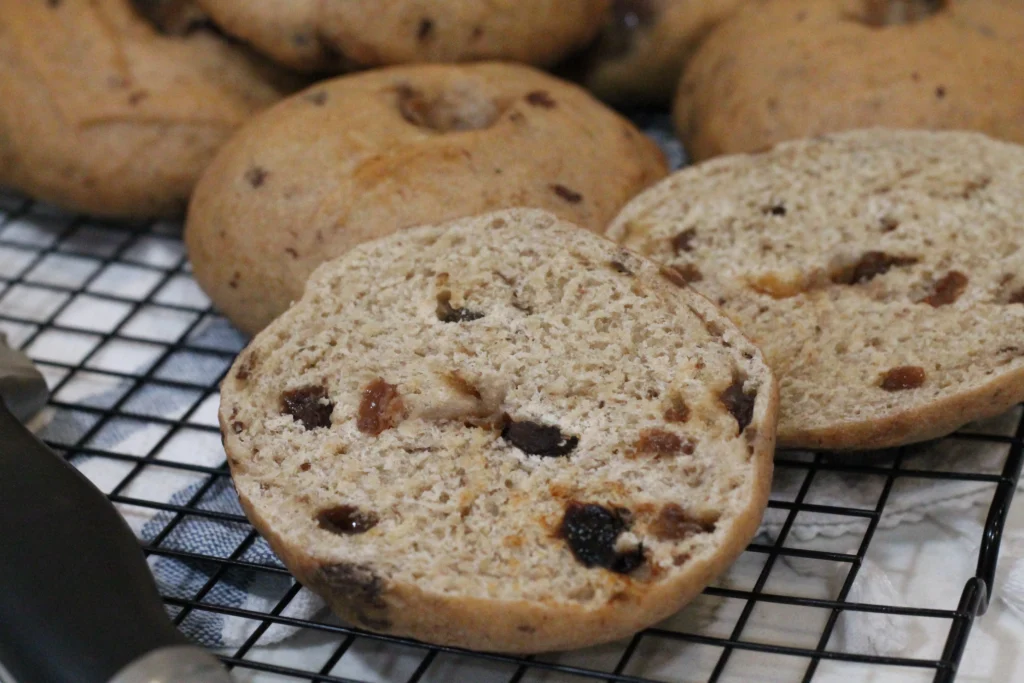
These potato flake sourdough cinnamon raisin bagels are soft, chewy and lightly sweet. Warm spices, little pops of sweetness from the juicy raisins, and that chewy bagel texture that store-bought versions never quite get right. These potato flake sourdough cinnamon raisin bagels have quickly become a favorite around our house — especially toasted with butter or cream cheese first thing in the morning.
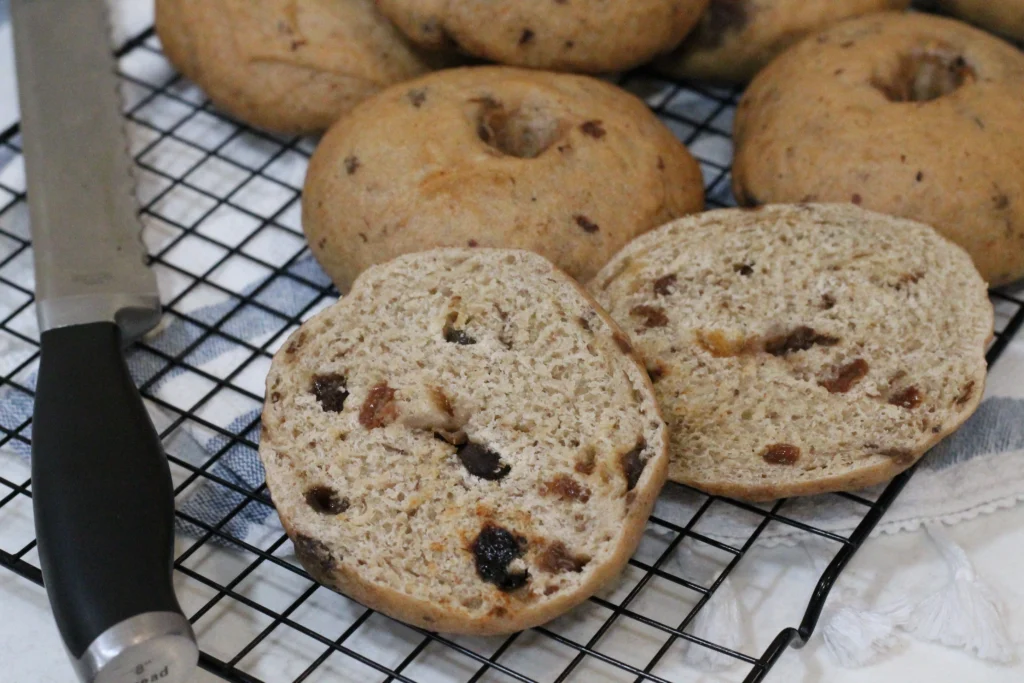
If you’ve never made homemade bagels before, don’t let the process intimidate you. Bagels are a little different than bread, but once you understand why we do each step, they’re actually very easy and so much cheaper than store bought. You don’t need any special equipment, which makes it even better. I’ll walk you through the whole thing and share plenty of tips along the way.
This recipe uses my potato flake sourdough starter, which gives the bagels great structure, natural fermentation, and that classic chewy texture without being sour. The cinnamon and sweet raisins make this dough a little slower to rise than some other potato flake sourdough bread, but the end result is absolutely worth the patience.
Why You’ll Love This Recipe
- Made with potato flake sourdough starter for a soft but chewy bagel
- Naturally leavened with no commercial yeast
- Lightly sweetened and perfectly spiced
- Freezer-friendly for easy breakfasts
- Detailed steps so even beginners can feel confident
This post may contain affiliate links, which means I may make a small commission at no extra cost to you. When you make a purchase through my link, you help me to keep Little Tennessee Home up and running! Thank you for your support! See my full disclosure here.
Equipment
- Stand mixer with a dough hook attachment
- Measuring cups and spoons
- Large pot
- Large sheet pan
- Chopstick or something similar
- Bench scraper
- Parchment paper squares
- Kitchen scale (optional, but easier to get precise measurements)
- Cooling rack
Ingredients
For the Dough
- ¾ cup potato flake starter (190 grams) (active starter is needed for this recipe)
- 4 cups all-purpose flour (560 grams)
- 1 teaspoon cinnamon
- 2 teaspoons salt (15 grams)
- 1 Tablespoon brown sugar (12 grams)
- ½ cup water (119 grams)
Raisin Soak
- ¾ cup raisins
- ½ cup boiling water
- 1 teaspoon vanilla
For Boiling
- 12 cups water
- 1 tablespoon baking soda
- 2 tablespoons brown sugar
How to Make the Cinnamon Raisin Bagels
Soak the Raisins
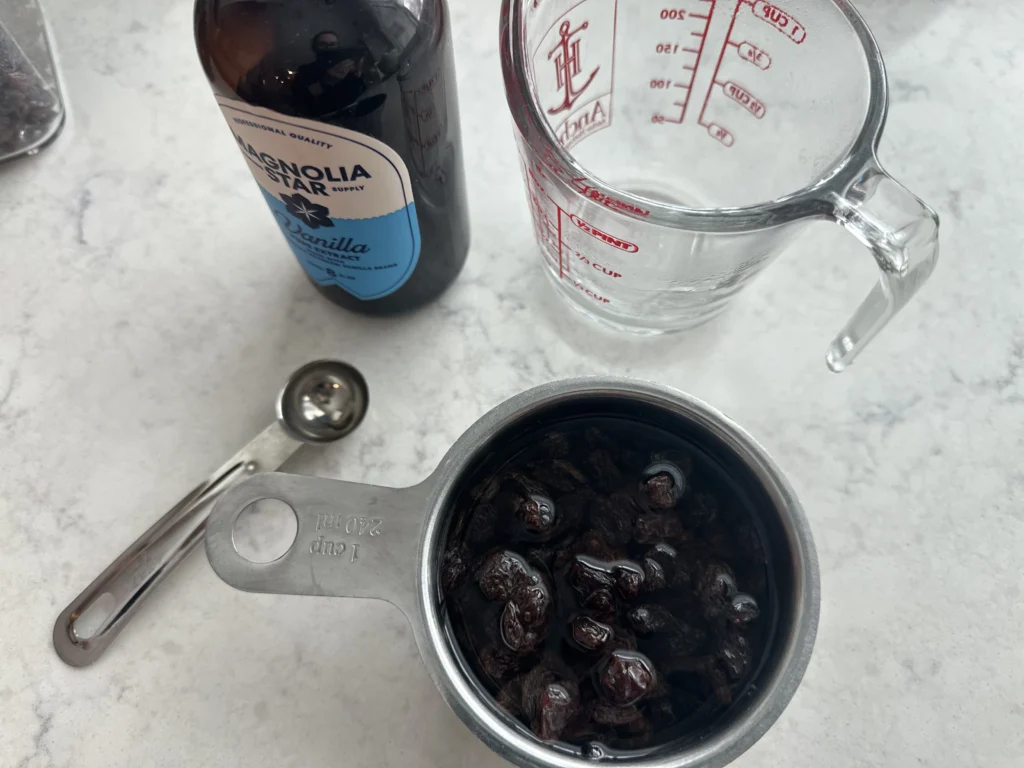
Place the raisins in a small bowl and cover them with ½ cup boiling water. Add 1 teaspoon of vanilla and allow them to sit for at least 5 minutes while you prepare the rest of the ingredients.
The raisins must cool to at least 110°F before being added to the dough. Hot liquid can damage your starter.
Mix the Dough
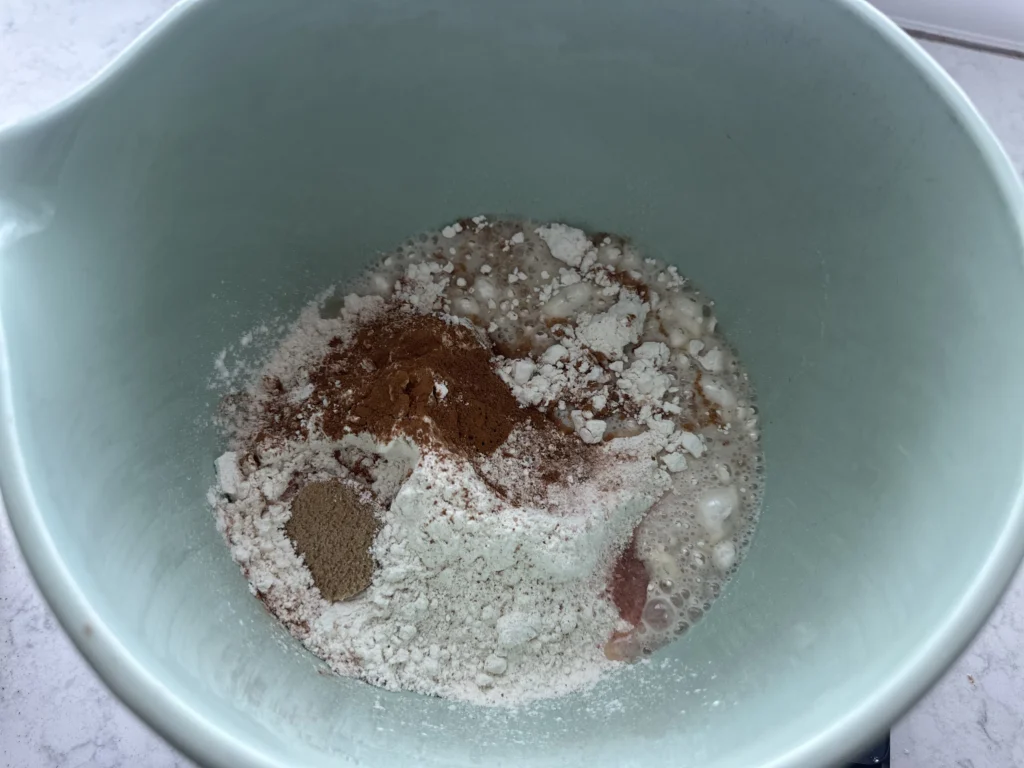
In the bowl of a stand mixer, combine the active starter, flour, salt, warm water, brown sugar, and raisin soak. (Be sure it has cooled down and is not too hot.)
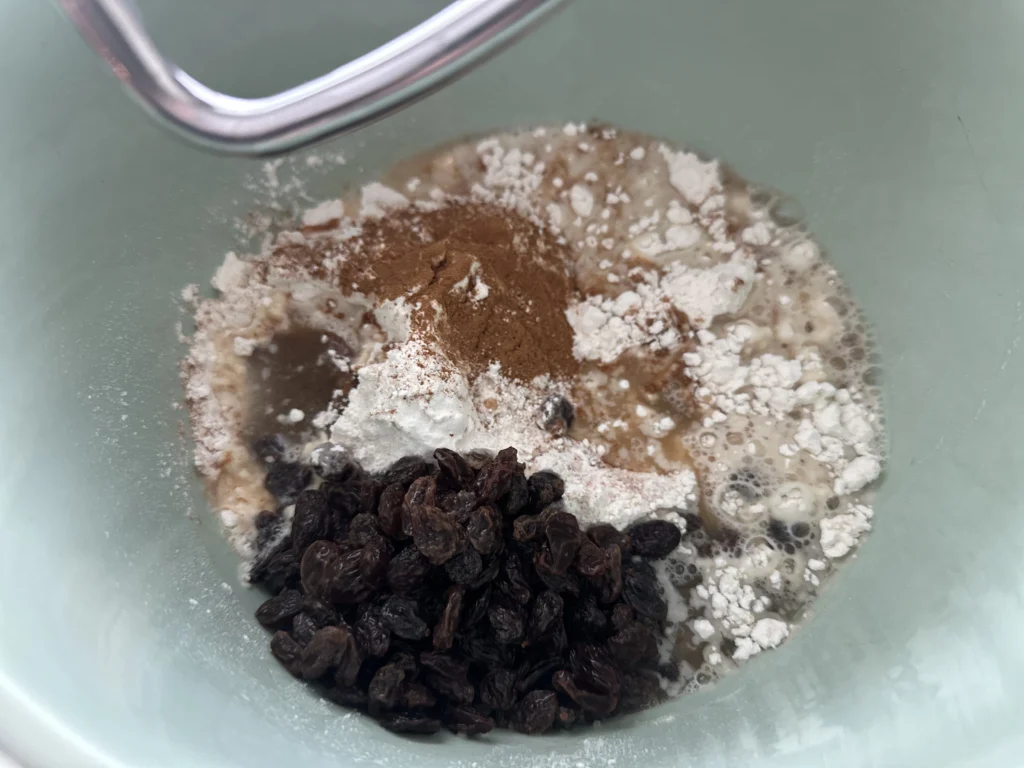
Using the dough hook, mix on low speed (number 2 on a KitchenAid mixer) for about 10 minutes, or until the dough pulls away from the sides of the bowl and is no longer sticky.
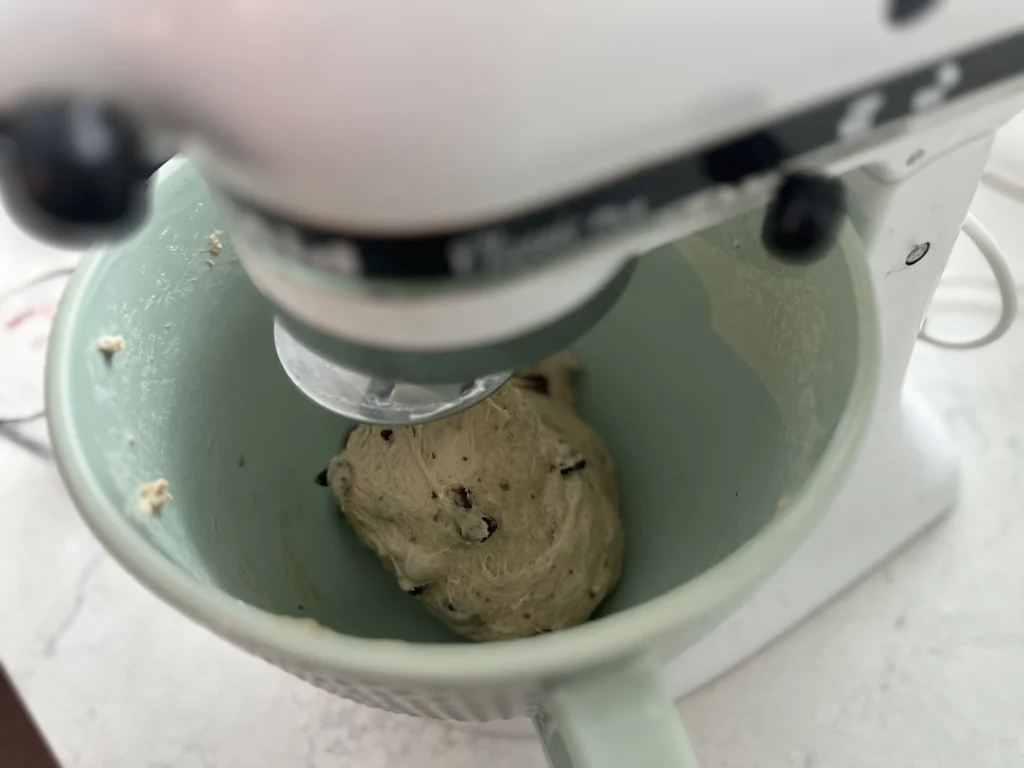
The dough should feel soft and smooth, not stiff.
Bulk Fermentation
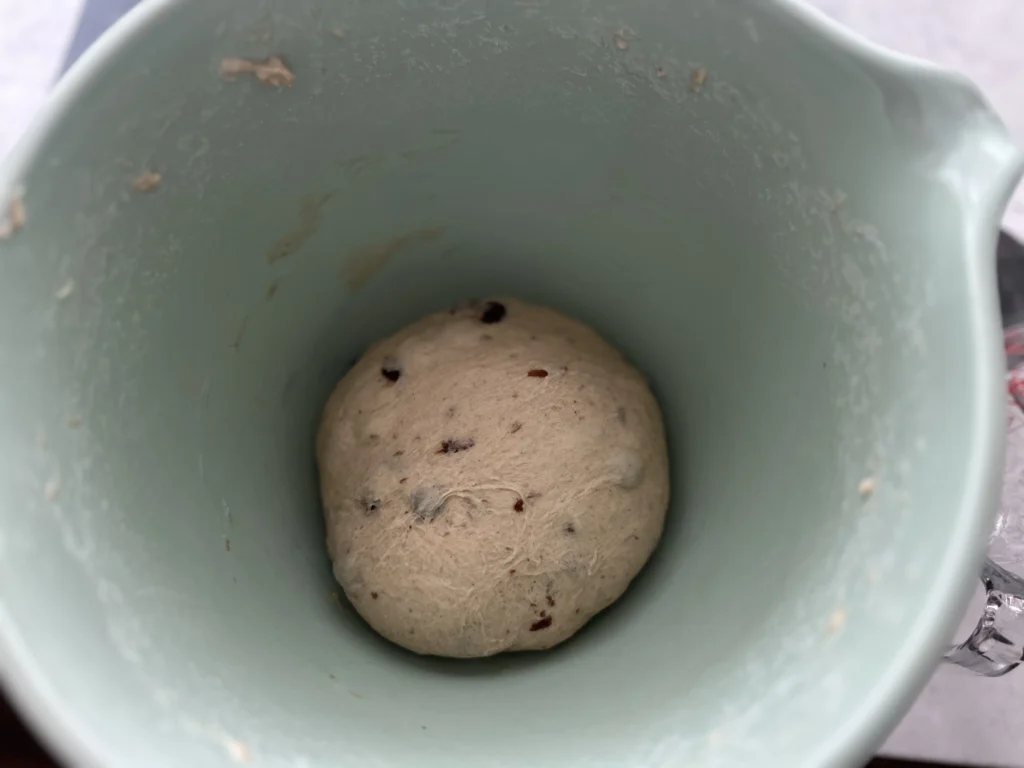
Place the dough into a greased bowl, cover with plastic wrap, and let it rise at room temperature for 8–12 hours, or until doubled in size.
Because cinnamon can slow fermentation, this dough may rise more slowly than other sourdough recipes. That’s normal, just be patient.
Divide the Dough
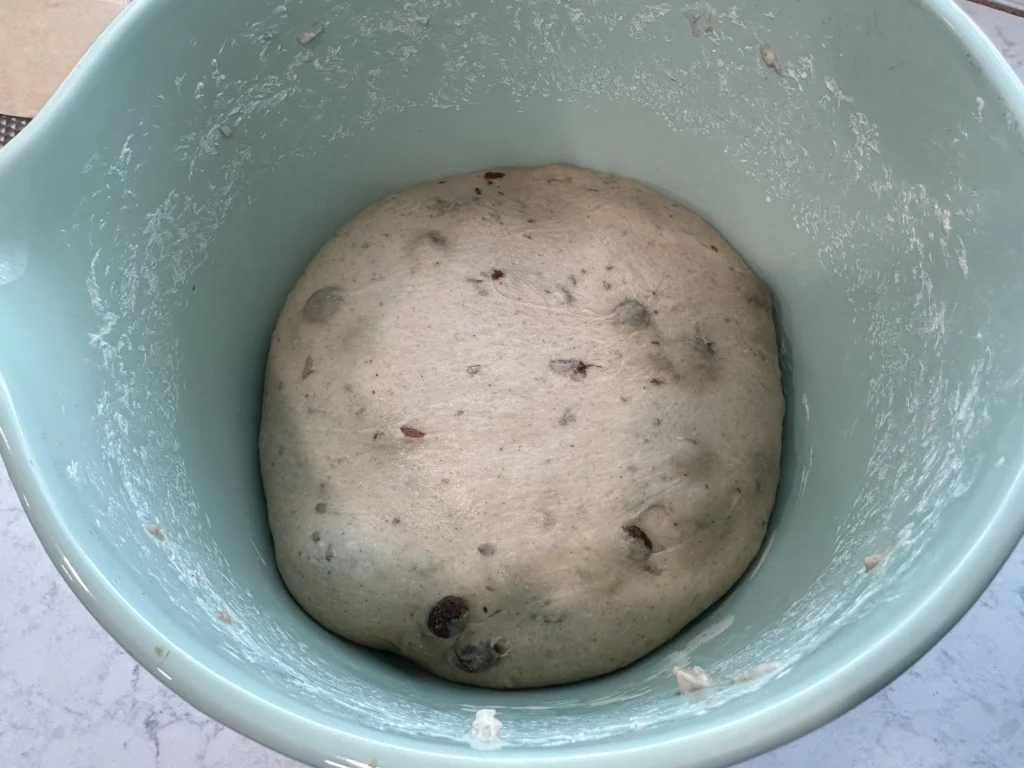
After the first rise, your dough should have doubled. Turn the dough out onto a clean surface and divide into 8 equal portions using a bench scraper.
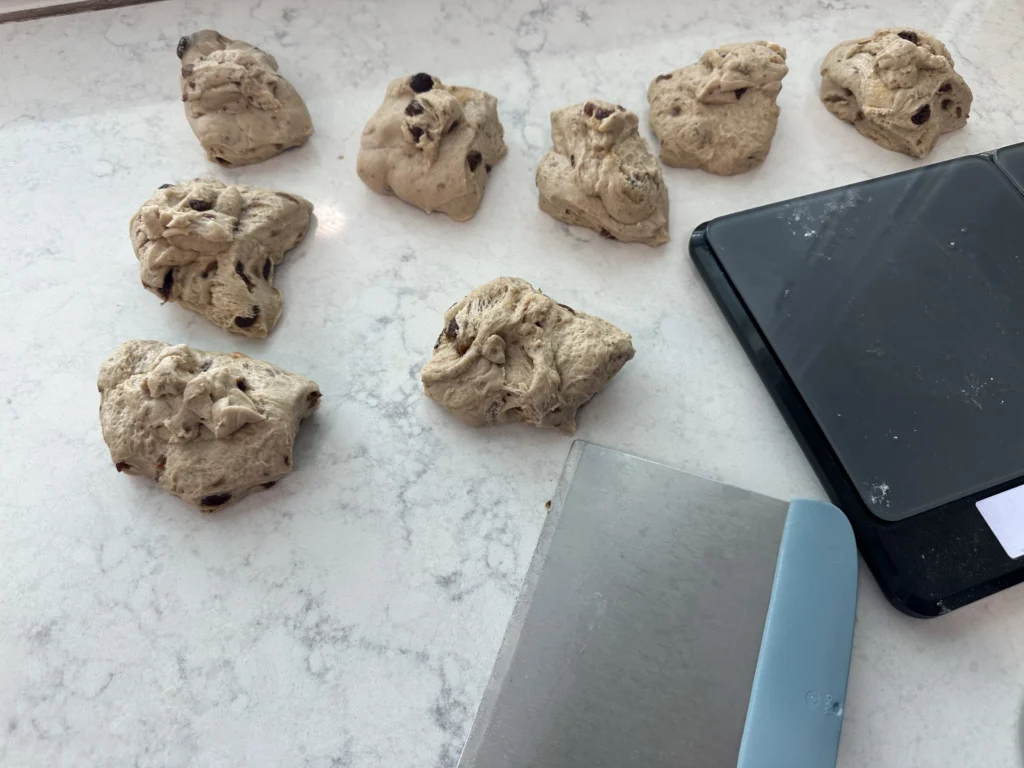
My total dough weighed about 1030 grams, and each dough ball weighed between 126–129 grams.
Using a kitchen scale here makes all the bagels bake evenly.
Shape the Dough Balls
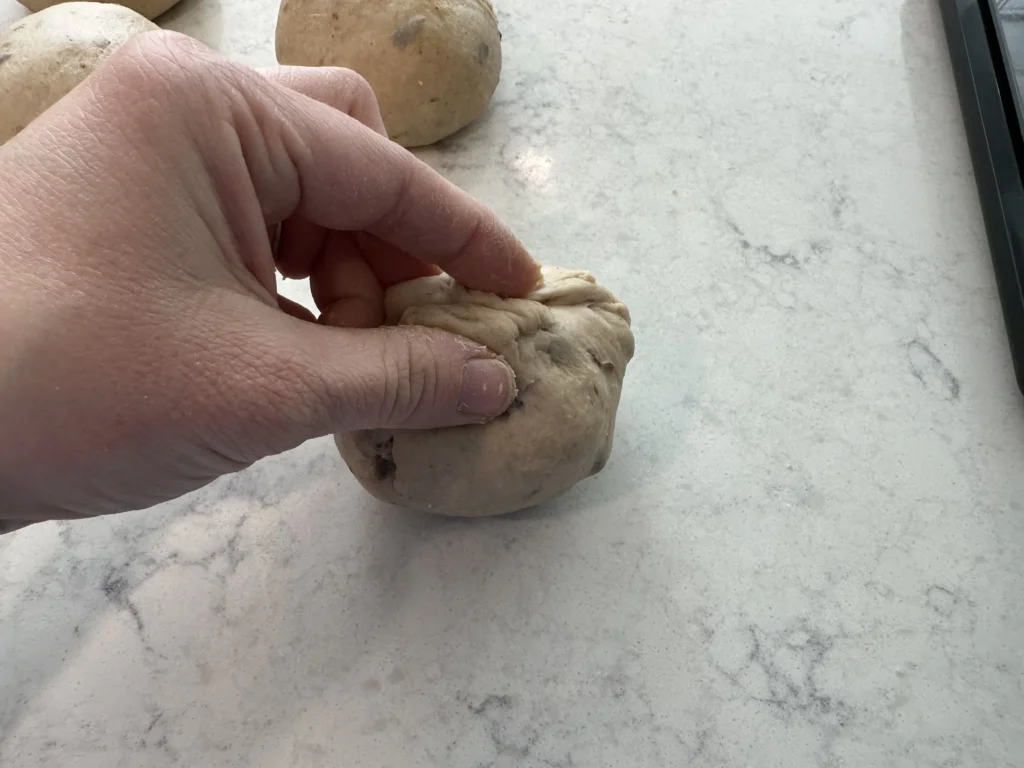
Take each portion and gather the edges inward, pinching tightly to form a ball. Flip it over so the seam is on the bottom.

Using your hand and the work surface, gently pull the dough toward you while rotating slightly to create surface tension. Repeat until the top is smooth and tight.

Cover the dough balls with plastic wrap or a damp tea towel and let them rest for 5 minutes. This relaxes the gluten and makes shaping much easier.
Shape the Bagels
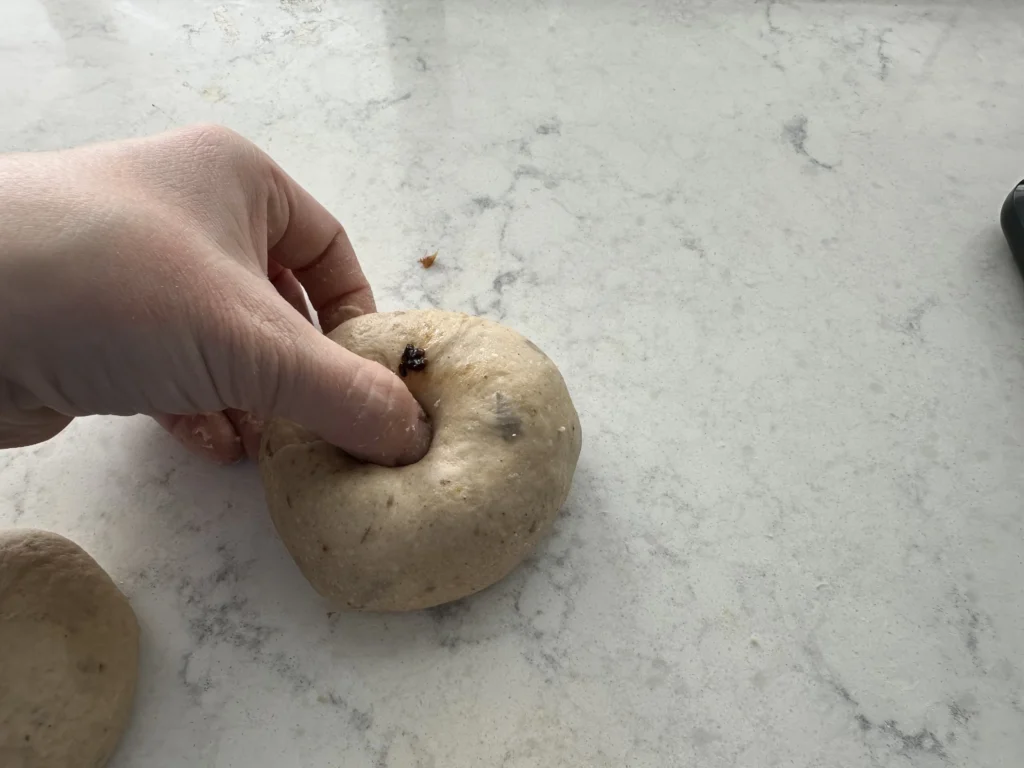
Use your fingers or thumbs to poke a hole through the center of each dough ball. Gently stretch into a bagel shape.
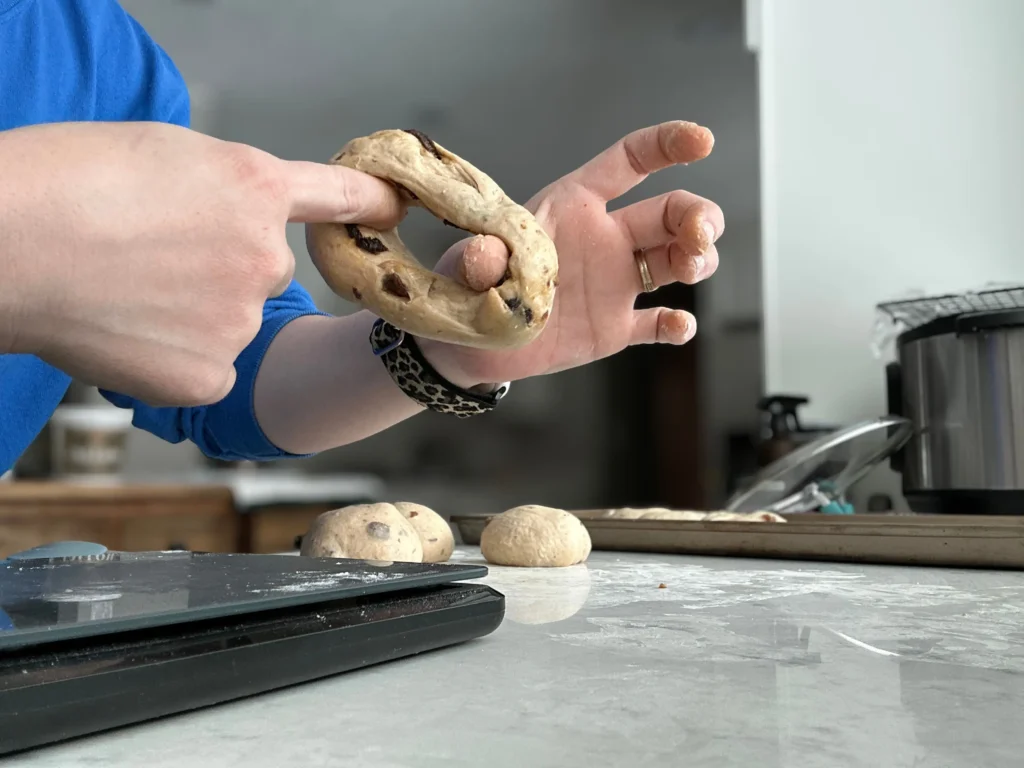
Spinning the dough around your two pointer fingers in a circular motion helps stretch it evenly and keeps the bagel round.

Place the shaped bagels onto a parchment-lined baking sheet.
Second Rise
Cover loosely with plastic wrap and allow the bagels to rise for 1–3 hours, until slightly puffy.
Do not overproof. They will puff up more during boiling and baking.
Boil the Bagels
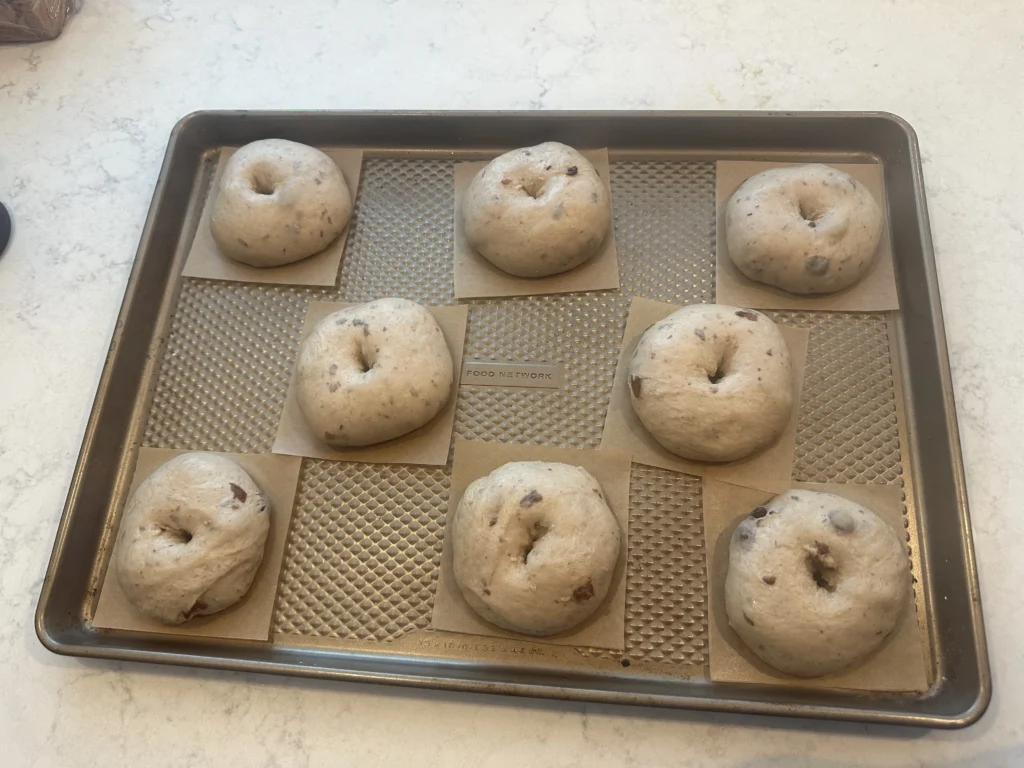
After the bagels have puffed up, preheat the oven to 350°F and bring a large pot of water to a gentle boil.
Add the baking soda and brown sugar.
Carefully transfer the bagels into the boiling water using parchment paper squares. As soon as the parchment hits the water, it will release the bagel easily and help prevent collapse.
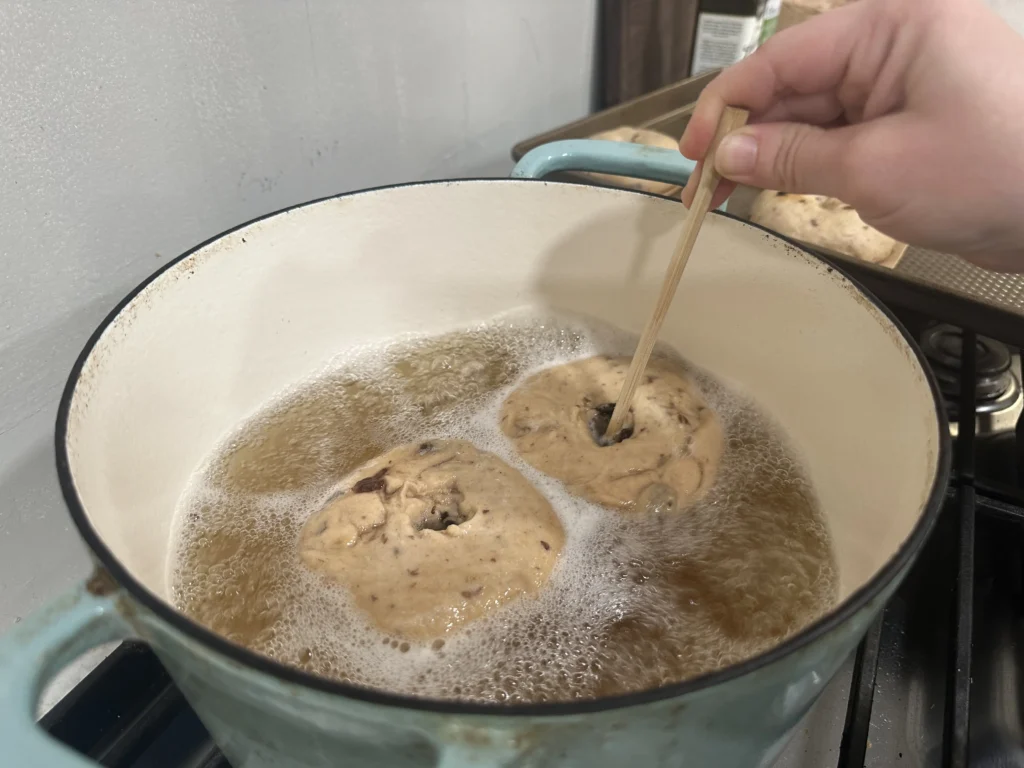
As soon as the bagel is in the water, use a chopstick to gently swirl inside the hole to keep it from closing.
Boil 3 bagels at a time for about 1 minute per side.
Remove with a slotted spoon and place back onto a parchment-lined baking sheet.
Bake
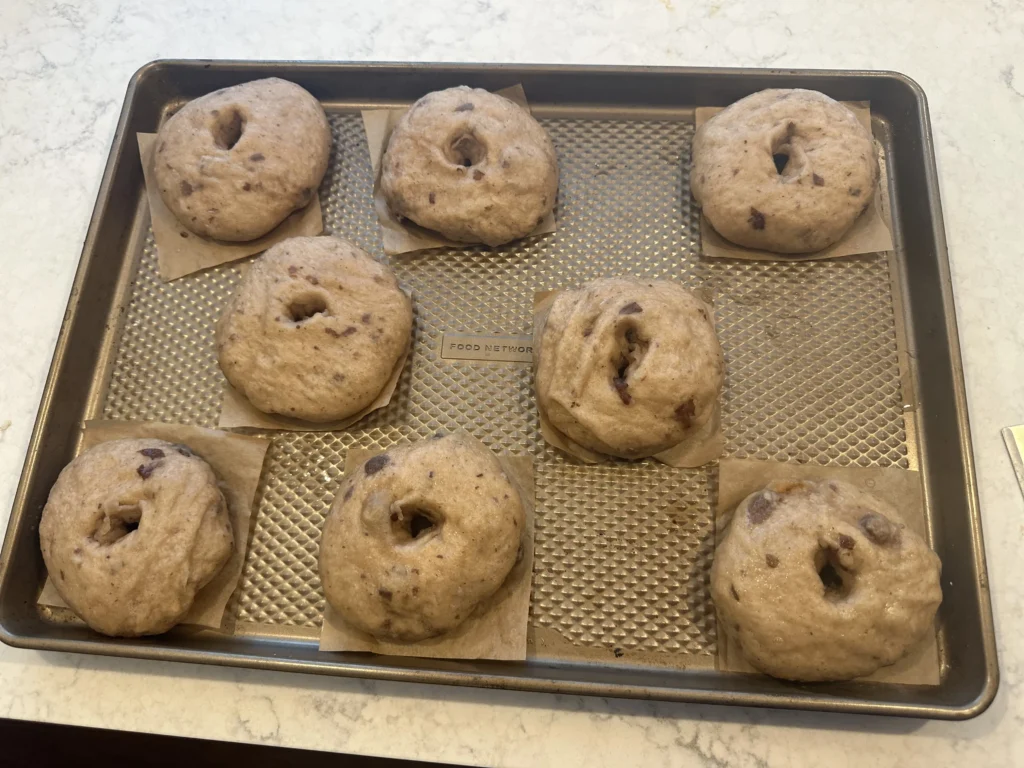
Once all the bagels are boiled (they may look slightly wrinkled), transfer the baking sheet to the oven.
Bake for 15 minutes, or until:
- Internal temperature reaches 190°F
- Bagels sound hollow when tapped on the bottom
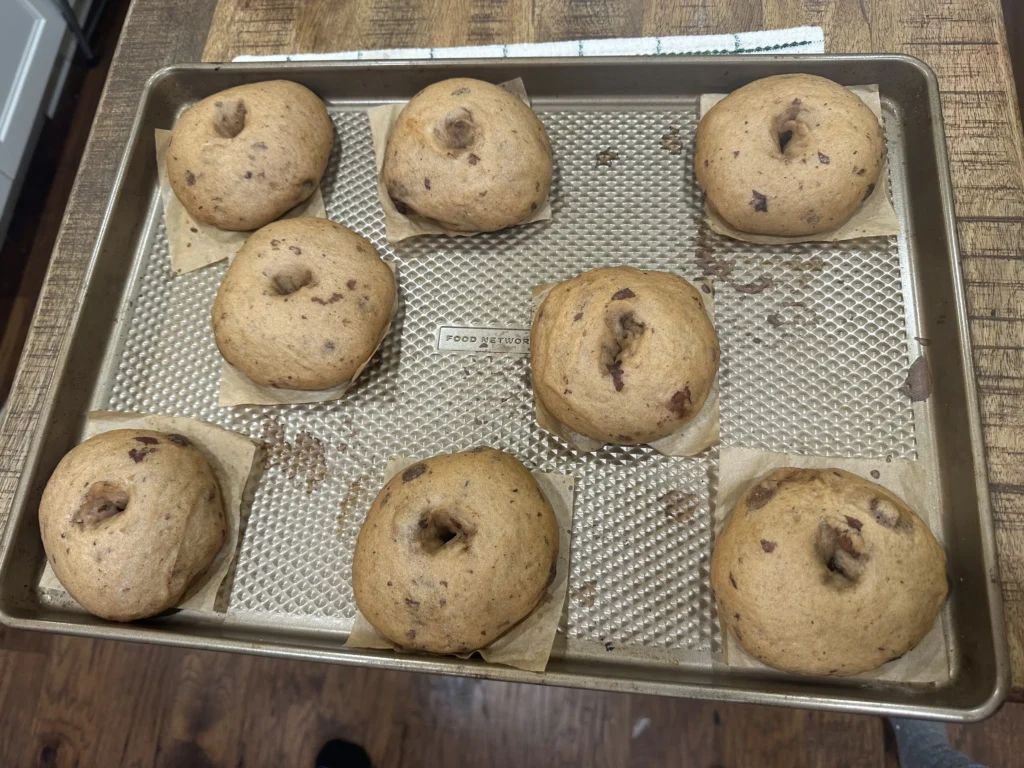
Allow to cool on a wire rack before slicing.
Serving & Storage
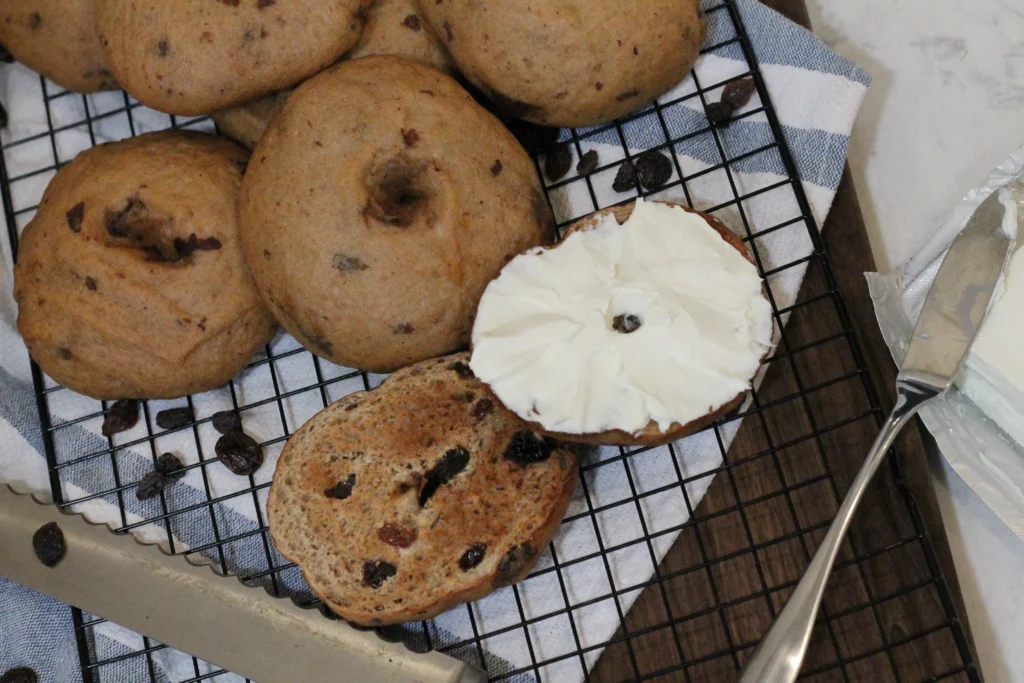
These cinnamon raisin bagels are best once they’ve cooled completely and the crumb has set. Cutting too soon can release steam causing the bagels to dry out sooner. My favorite way to serve them is covered with a generous layer of cream cheese. They’re also delicious toasted with butter, honey butter, or even a thin spread of peanut butter for a more filling breakfast.
For little ones, I like to slice and lightly toast them, then cut into halves or quarters for easy handling. They will even runoff with a unsliced bagel in hand as a snack. Making mini homemade cinnamon raisin bagels for snacks would be perfect for little ones!
How to Store
- Room Temperature: Store in an airtight container for up to 2 days
- Refrigerator: Not recommended — refrigeration tends to dry bagels out
- Freezer: Slice once cooled, then freeze in an airtight bag for up to 3 months
To reheat leftover bagels, toast straight from the freezer. No thawing needed.
These freeze beautifully, which makes this recipe perfect for weekend baking and easy weekday breakfasts.
Notes & Tips
- If kneading by hand, knead for 15–20 minutes until smooth
- Rise times vary depending on your home temperature
- Cinnamon can slow fermentation — This bagel recipe can rise slower than other bagel recipes because of this. Also be cautious if adding extra cinnamon for this reason.
Tip for Perfectly Sized Bagels
Weigh your total dough first, then divide by 8 to get the exact weight for each bagel. I love using my scale for this!
Tip for Easier Boiling
Use parchment squares, not a full sheet, to easily transfer bagels into the water without deflating them.
Example Timeline:
- Mix & knead: ~10 minutes
- First rise: 8–12 hours
- Shaping & rest: ~15 minutes
- Second rise: 1–3 hours
- Boil & bake: ~25 minutes
FAQs
Can I knead this dough by hand?
Yes. Plan on 15–20 minutes of kneading until the dough is smooth and elastic.
Why is my dough rising slowly?
Cinnamon naturally slows fermentation, and can cause this recipe to rise slower than you might be used to. A longer rise is normal for this recipe.
Why do we boil bagels before baking?
Boiling sets the outside of the bagel, giving it that classic chewy crust and helping it keep its shape in the oven.
Can I freeze these bagels?
Yes! Once fully cooled, slice and freeze. Toast straight from the freezer for an easy breakfast.
How do I keep the hole from closing?
Stretch the hole slightly larger than you think you need, and swirl a chopstick inside the hole as soon as the bagel goes into the boiling water.
Other Recipes You Might Want to Check Out
If you loved these potato flake sourdough cinnamon raisin bagels, here are a few more potato flake sourdough favorites from Little Tennessee Home that I think you’ll enjoy:
- Potato Flake Sourdough Original Sandwich Bread – A soft, everyday loaf that’s perfect for toast, sandwiches, and even French toast
- Potato Flake Sourdough Dinner Rolls – Light, fluffy, and a family favorite for holidays or weeknight meals
- Potato Flake Sourdough Discard Recipes – A great way to use up extra starter without waste
- Potato Flake Sourdough Chocolate Crinkle Cookies – A fun, sweet treat using potato flake sourdough
- Potato Flake Sourdough Cinnamon Rolls – Soft, gooey, and perfect for slow mornings or special occasions
You can find all of my potato flake sourdough recipes right here on Little Tennessee Home.
If you give this recipe a try, I would greatly appreciate if you came back and gave it a 5-star review! It helps me out so much!
I also love seeing all of the delicious creations you make! Share your photo over on instagram or facebook and give me a tag @littletennesseehome
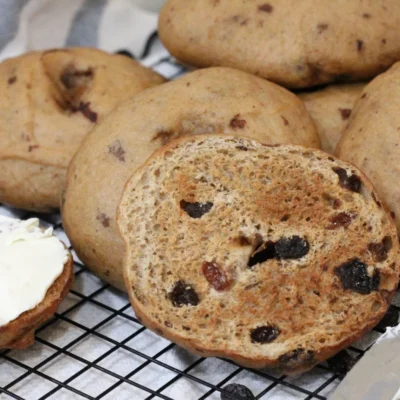
Potato Flake Sourdough Cinnamon Raisin Bagels
Equipment
- Stand mixer with a dough hook attachment
- measuring cups and spoons
- Large pot
- Large sheet pan
- Chopstick or something similar
- Bench scraper
- Parchment paper squares
- Kitchen scale (optional, but easier to get precise measurements)
- Cooling Rack
Ingredients
For the Dough
- ¾ cup potato flake starter 190 grams (active starter is needed for this recipe)
- 4 cups all-purpose flour 560 grams
- 1 teaspoon cinnamon
- 2 teaspoons salt 15 grams
- 1 Tablespoon brown sugar 12 grams
- ½ cup water 119 grams
Raisin Soak
- ¾ cup raisins
- ½ cup boiling water
- 1 teaspoon vanilla
For Boiling
- 12 cups water
- 1 tablespoon baking soda
- 2 tablespoons brown sugar
Instructions
- Place the raisins in a small bowl and cover them with ½ cup boiling water. Add 1 teaspoon of vanilla and allow them to sit for at least 5 minutes while you prepare the rest of the ingredients.
- The raisins must cool to at least 110°F before being added to the dough. Hot liquid can damage your starter.
- In the bowl of a stand mixer, combine the active starter, flour, salt, warm water, brown sugar, and raisin soak. (Be sure it has cooled down and is not too hot.)
- Using the dough hook, mix on low speed (number 2 on a KitchenAid mixer) for about 10 minutes, or until the dough pulls away from the sides of the bowl and is no longer sticky. The dough should feel soft and smooth, not stiff.
- Place the dough into a greased bowl, cover with plastic wrap, and let it rise at room temperature for 8–12 hours, or until doubled in size. Because cinnamon can slow fermentation, this dough may rise more slowly than other sourdough recipes. That’s normal, just be patient.
- After the first rise, your dough should have doubled. Turn the dough out onto a clean surface and divide into 8 equal portions using a bench scraper.
- My total dough weighed about 1030 grams, and each dough ball weighed between 126–129 grams. Using a kitchen scale here makes all the bagels bake evenly.
- Take each portion and gather the edges inward, pinching tightly to form a ball. Flip it over so the seam is on the bottom.
- Using your hand and the work surface, gently pull the dough toward you while rotating slightly to create surface tension. Repeat until the top is smooth and tight.
- Cover the dough balls with plastic wrap or a damp tea towel and let them rest for 5 minutes. This relaxes the gluten and makes shaping much easier.
- Use your fingers or thumbs to poke a hole through the center of each dough ball. Gently stretch into a bagel shape.
- Spinning the dough around your two pointer fingers in a circular motion helps stretch it evenly and keeps the bagel round.
- Place the shaped bagels onto a parchment-lined baking sheet.
- Cover loosely with plastic wrap and allow the bagels to rise for 1–3 hours, until slightly puffy.
- Do not overproof. They will puff up more during boiling and baking.
- After the bagels have puffed up, preheat the oven to 350°F and bring a large pot of water to a gentle boil. Add the baking soda and brown sugar.
- Carefully transfer the bagels into the boiling water using parchment paper squares. As soon as the parchment hits the water, it will release the bagel easily and help prevent collapse.
- As soon as the bagel is in the water, use a chopstick to gently swirl inside the hole to keep it from closing.
- Boil 3 bagels at a time for about 1 minute per side. Remove with a slotted spoon and place back onto a parchment-lined baking sheet.
- Once all the bagels are boiled (they may look slightly wrinkled), transfer the baking sheet to the oven.
- Bake for 15 minutes, or until the internal temperature reaches 190°F or bagels sound hollow when tapped on the bottom
- Allow to cool on a wire rack before slicing.