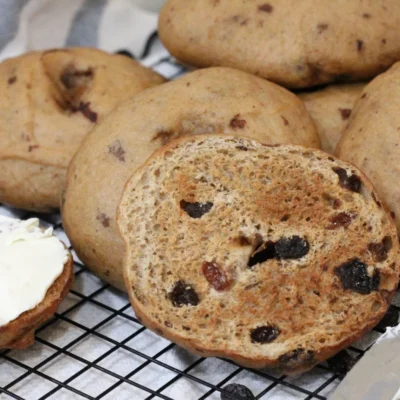
Potato Flake Sourdough Cinnamon Raisin Bagels
These potato flake sourdough cinnamon raisin bagels are soft, chewy and lightly sweet. Warm spices, little pops of sweetness from the juicy raisins, and that chewy bagel texture that store-bought versions never quite get right.
Equipment
- Stand mixer with a dough hook attachment
- measuring cups and spoons
- Large pot
- Large sheet pan
- Chopstick or something similar
- Bench scraper
- Parchment paper squares
- Kitchen scale (optional, but easier to get precise measurements)
- Cooling Rack
Ingredients
For the Dough
- ¾ cup potato flake starter 190 grams (active starter is needed for this recipe)
- 4 cups all-purpose flour 560 grams
- 1 teaspoon cinnamon
- 2 teaspoons salt 15 grams
- 1 Tablespoon brown sugar 12 grams
- ½ cup water 119 grams
Raisin Soak
- ¾ cup raisins
- ½ cup boiling water
- 1 teaspoon vanilla
For Boiling
- 12 cups water
- 1 tablespoon baking soda
- 2 tablespoons brown sugar
Instructions
- Place the raisins in a small bowl and cover them with ½ cup boiling water. Add 1 teaspoon of vanilla and allow them to sit for at least 5 minutes while you prepare the rest of the ingredients.
- The raisins must cool to at least 110°F before being added to the dough. Hot liquid can damage your starter.
- In the bowl of a stand mixer, combine the active starter, flour, salt, warm water, brown sugar, and raisin soak. (Be sure it has cooled down and is not too hot.)
- Using the dough hook, mix on low speed (number 2 on a KitchenAid mixer) for about 10 minutes, or until the dough pulls away from the sides of the bowl and is no longer sticky. The dough should feel soft and smooth, not stiff.
- Place the dough into a greased bowl, cover with plastic wrap, and let it rise at room temperature for 8–12 hours, or until doubled in size. Because cinnamon can slow fermentation, this dough may rise more slowly than other sourdough recipes. That’s normal, just be patient.
- After the first rise, your dough should have doubled. Turn the dough out onto a clean surface and divide into 8 equal portions using a bench scraper.
- My total dough weighed about 1030 grams, and each dough ball weighed between 126–129 grams. Using a kitchen scale here makes all the bagels bake evenly.
- Take each portion and gather the edges inward, pinching tightly to form a ball. Flip it over so the seam is on the bottom.
- Using your hand and the work surface, gently pull the dough toward you while rotating slightly to create surface tension. Repeat until the top is smooth and tight.
- Cover the dough balls with plastic wrap or a damp tea towel and let them rest for 5 minutes. This relaxes the gluten and makes shaping much easier.
- Use your fingers or thumbs to poke a hole through the center of each dough ball. Gently stretch into a bagel shape.
- Spinning the dough around your two pointer fingers in a circular motion helps stretch it evenly and keeps the bagel round.
- Place the shaped bagels onto a parchment-lined baking sheet.
- Cover loosely with plastic wrap and allow the bagels to rise for 1–3 hours, until slightly puffy.
- Do not overproof. They will puff up more during boiling and baking.
- After the bagels have puffed up, preheat the oven to 350°F and bring a large pot of water to a gentle boil. Add the baking soda and brown sugar.
- Carefully transfer the bagels into the boiling water using parchment paper squares. As soon as the parchment hits the water, it will release the bagel easily and help prevent collapse.
- As soon as the bagel is in the water, use a chopstick to gently swirl inside the hole to keep it from closing.
- Boil 3 bagels at a time for about 1 minute per side. Remove with a slotted spoon and place back onto a parchment-lined baking sheet.
- Once all the bagels are boiled (they may look slightly wrinkled), transfer the baking sheet to the oven.
- Bake for 15 minutes, or until the internal temperature reaches 190°F or bagels sound hollow when tapped on the bottom
- Allow to cool on a wire rack before slicing.
Notes
These cinnamon raisin bagels are best once they’ve cooled completely and the crumb has set. Cutting too soon can release steam causing the bagels to dry out sooner.
Store at Room Temperature: Store in an airtight container for up to 2 days
Freezer storage: Slice once cooled, then freeze in an airtight bag for up to 3 months
To reheat leftover bagels, toast straight from the freezer. No thawing needed.
If kneading by hand, knead for 15–20 minutes until smooth
Rise times vary depending on your home temperature
Cinnamon can slow fermentation — This bagel recipe can rise slower than other bagel recipes because of this. Also be cautious if adding extra cinnamon for this reason.