If you’ve ever wanted to make a Potato Flake Sourdough King Cake but felt intimidated, let me reassure you right up front: this one is completely doable at home. It is soft, lightly sweet, beautifully braided, and filled with a classic cinnamon sugar swirl. Finally it’s topped with a simple vanilla glaze and festive sprinkles.
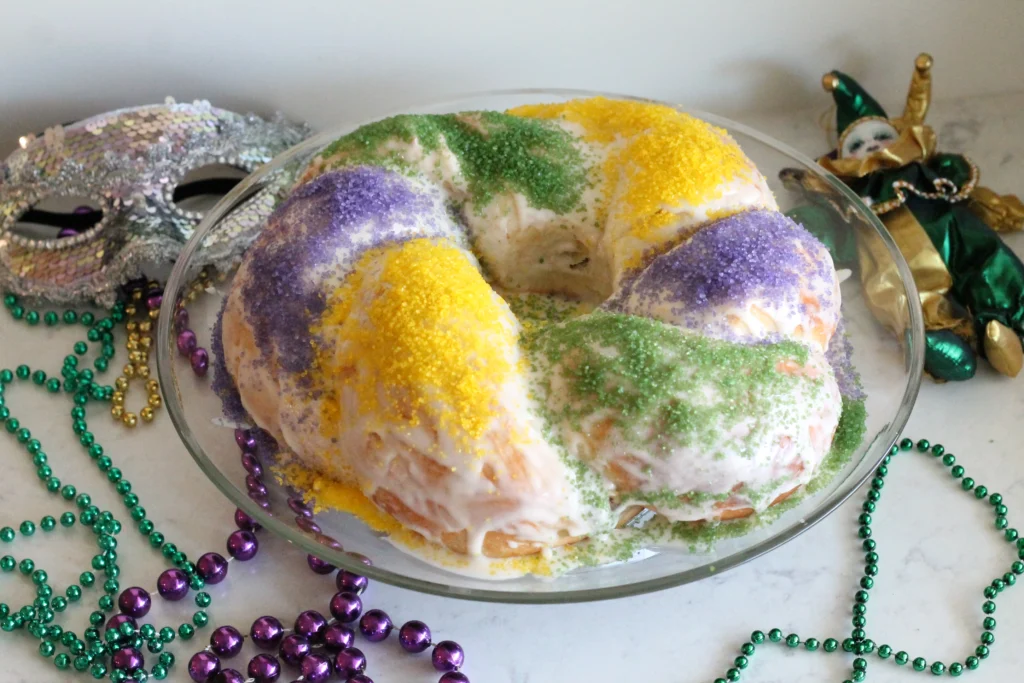
Using a potato flake sourdough starter gives this cake a tender crumb and gentle depth of flavor without any strong sourness. It’s the kind of bread that feels special enough for Mardi Gras, but honestly? I wouldn’t blame you for making it just because, it doesn’t have to be limited to king cake season.
Whether this is your first King Cake or your first enriched potato flake sourdough, I’ll walk you through it step by step.
A King Cake Tradition
King Cake is well known in New Orleans but made all over. It’s traditionally made during the Mardi Gras season, which begins on Epiphany (January 6) and continues through Fat Tuesday. The cake is usually shaped into a ring or oval to represent a crown and is decorated in purple, green, and gold—colors that symbolize justice, faith, and power.
Hidden inside the cake is a small plastic baby. Whoever finds the baby in their slice is said to have good luck for the year and is traditionally responsible for bringing or making the King Cake the following year. It’s a fun tradition, especially with kids, and adds a little excitement to every slice.
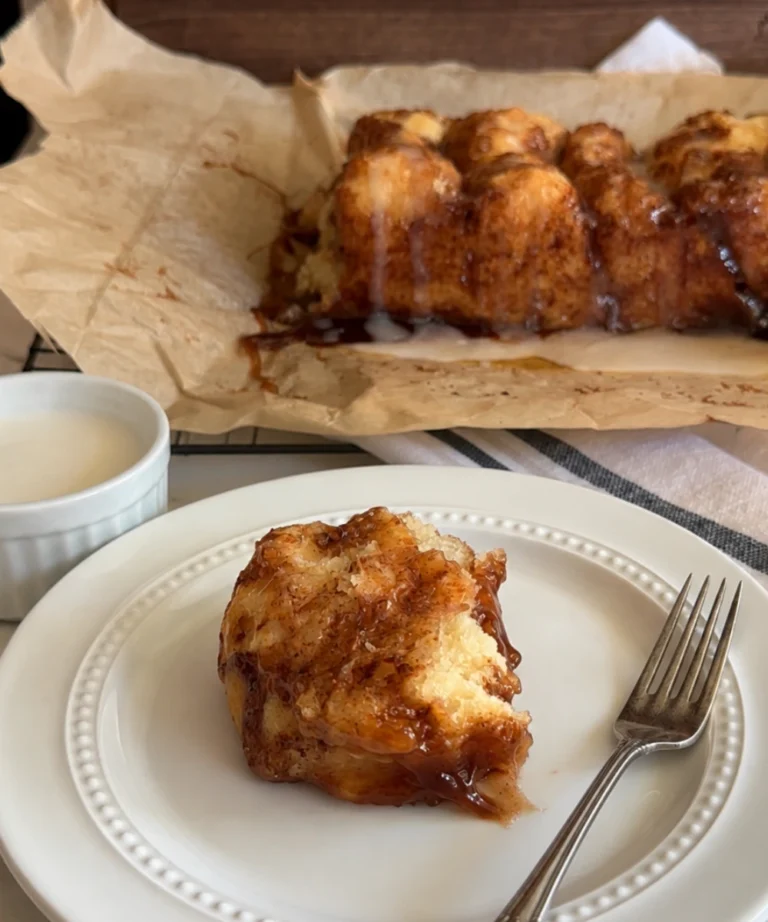
If you find this recipe too intimidating, or you just want something a little more simple, try making the potato flake sourdough monkey bread instead and top it with icing and sugar sprinkles. That would be a fun pull apart twist on the traditional king cake!
Why Use Potato Flake Sourdough?
Potato flake sourdough works especially well in enriched doughs like this one. It creates:
- A soft, fluffy texture
- A mild, slightly sweet flavor
- Reliable fermented rise without commercial yeast
If you already bake with a potato flake starter, this dough will feel very familiar. It’s very similar to making cinnamon rolls, but I’ve added a few things turn this into an enriched dough you’d expect in a homemade king cake.
This post may contain affiliate links through amazon, which means I may make a small commission at no extra cost to you. When you make a purchase through my link, you help me to keep Little Tennessee Home up and running! Thank you for your support! See my full disclosure here.
Tools You’ll Need
- Stand mixer with dough hook (or a large bowl and strong hands)
- Measuring cups and spoons
- Digital Scale (optional but helpful for measuring flour)
- Microwave-safe bowl
- Dough scraper (optional but helpful when rolling the dough up if sticking to the work surface)
- Rolling pin
- Pizza cutter or sharp knife
- Pastry brush
- Parchment paper
- Large baking sheet
- Plastic wrap
- Digital thermometer (recommended)
- Small oven-safe bowl or jar (optional, to keep the center open)
Potato Flake Sourdough King Cake Recipe
Ingredients
Dough
- ½ cup milk
- 3 Tablespoons coconut oil
- ½ Tablespoon salt
- 1 cup active potato flake starter
- ¼ cup sugar
- 1 large egg, room temperature
- 3 Tablespoons potato flakes
- 1 teaspoon vanilla extract
- 4 cups bread flour, scooped and leveled (480 grams)
OR
4 cups all-purpose flour (480 grams) with 2 Tablespoons vital wheat gluten (17 grams) added
Cinnamon Filling
- ½ cup sugar
- 2–3 teaspoons ground cinnamon
- 4 Tablespoons salted butter, melted
Frosting
- 1–2 cups powdered sugar (depending on desired thickness)
- 2 Tablespoons milk
- 1 Tablespoon salted butter, melted
- 1 teaspoon vanilla extract
Extras
- One small plastic baby
- Dye-free sugar sprinkles (purple, green, and yellow/gold)
Instructions
Make the Dough
Begin by heating the milk and coconut oil together in a microwave-safe bowl for 60–90 seconds, just until lukewarm (about 100°F).
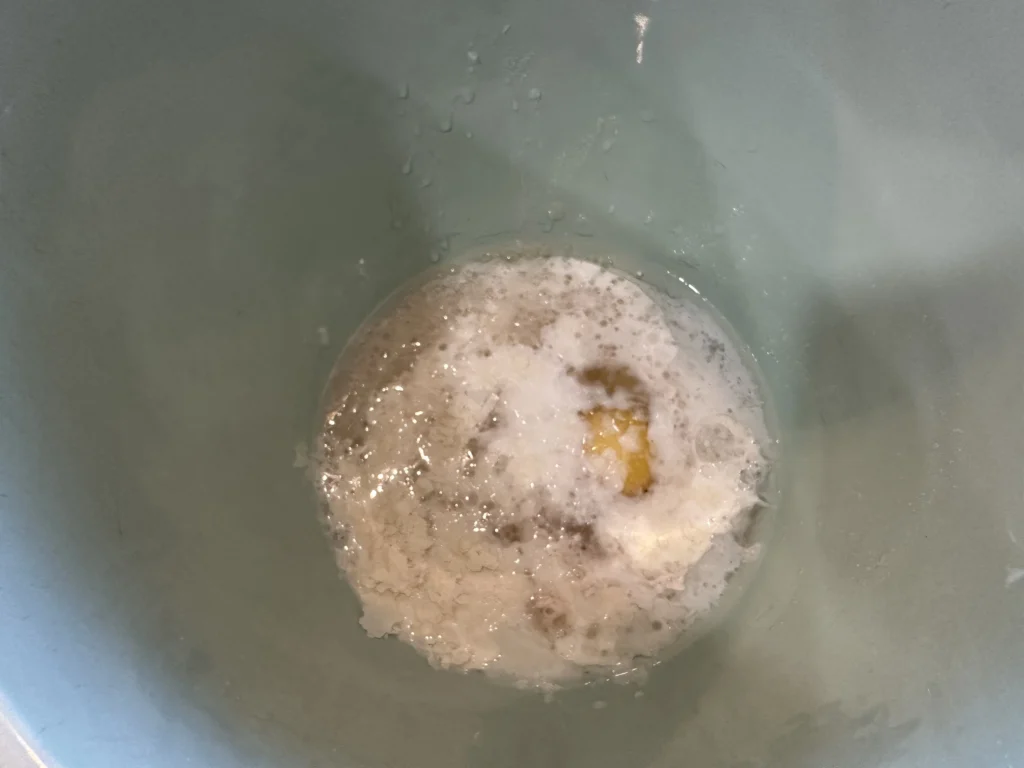
In the bowl of a stand mixer fitted with a dough hook, add the potato flake starter, warm milk and coconut oil, vanilla extract, salt, room-temperature egg, sugar, and potato flakes. Mix briefly on low speed until combined.
With the mixer still on low, gradually add the flour until a dough forms. Scrape down the sides of the bowl to make sure it is all incorporated.
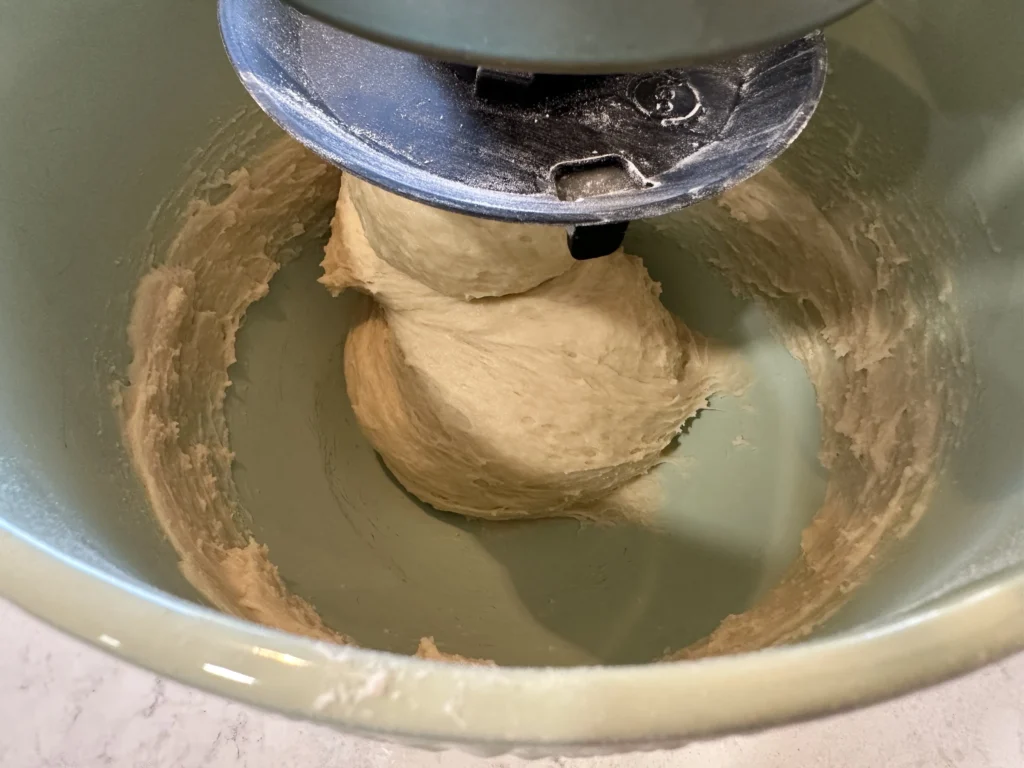
Once all the flour has been added, knead on low speed for 6–10 minutes. The dough should be smooth and slightly tacky but not overly sticky.
Cover the bowl with plastic wrap and let the dough rise at room temperature until almost doubled, about 6–10 hours.
Shape and Fill the King Cake
Line a large baking sheet with parchment paper.
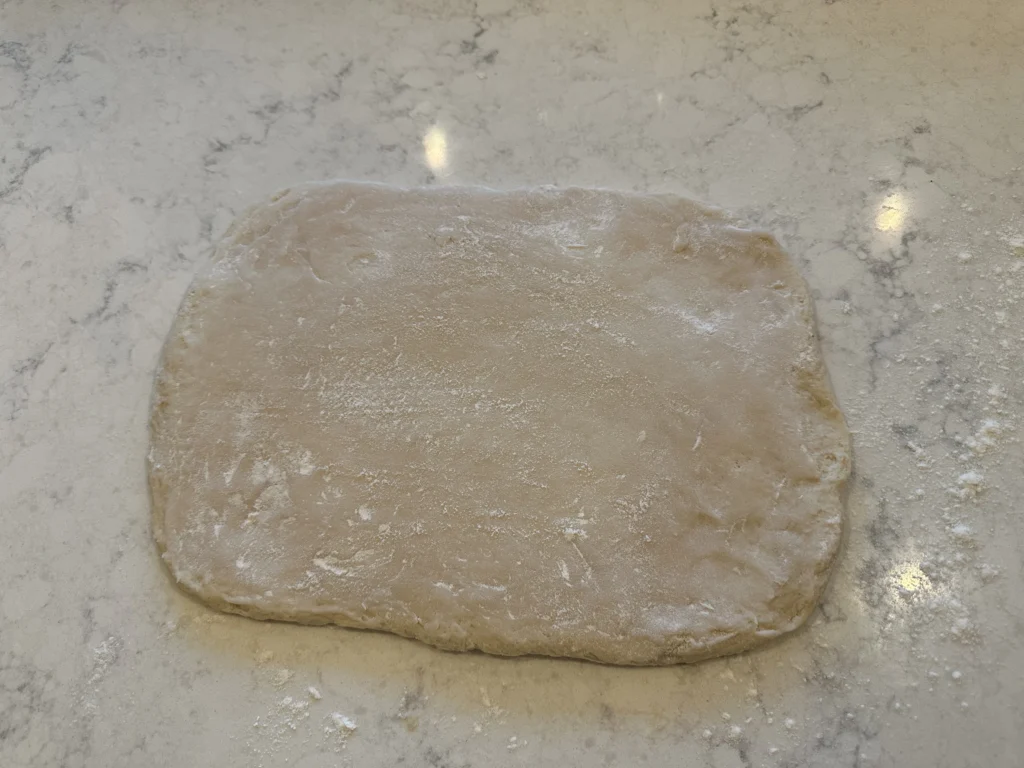
Turn the dough out onto a lightly floured surface. Before rolling press the dough into a rectangular shape first, getting it as close to the size and shape you can with your hands first. Now, roll until you get a large rectangle, roughly 11 × 18 inches.
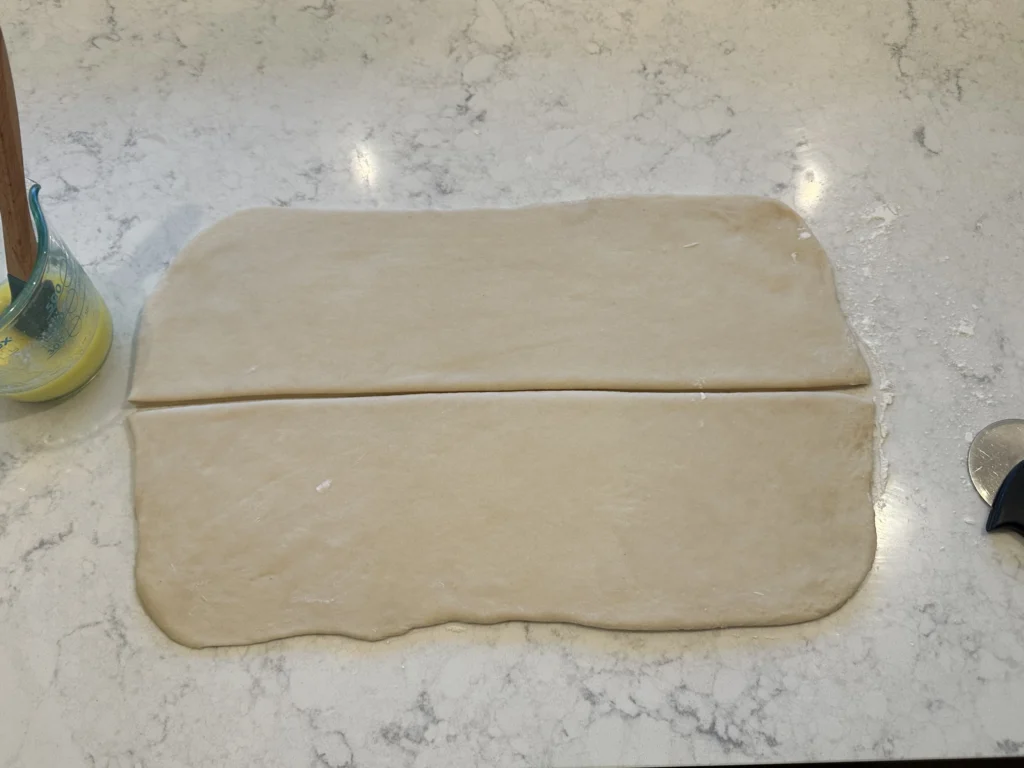
Using a pizza cutter, divide the dough lengthwise into two long rectangles.
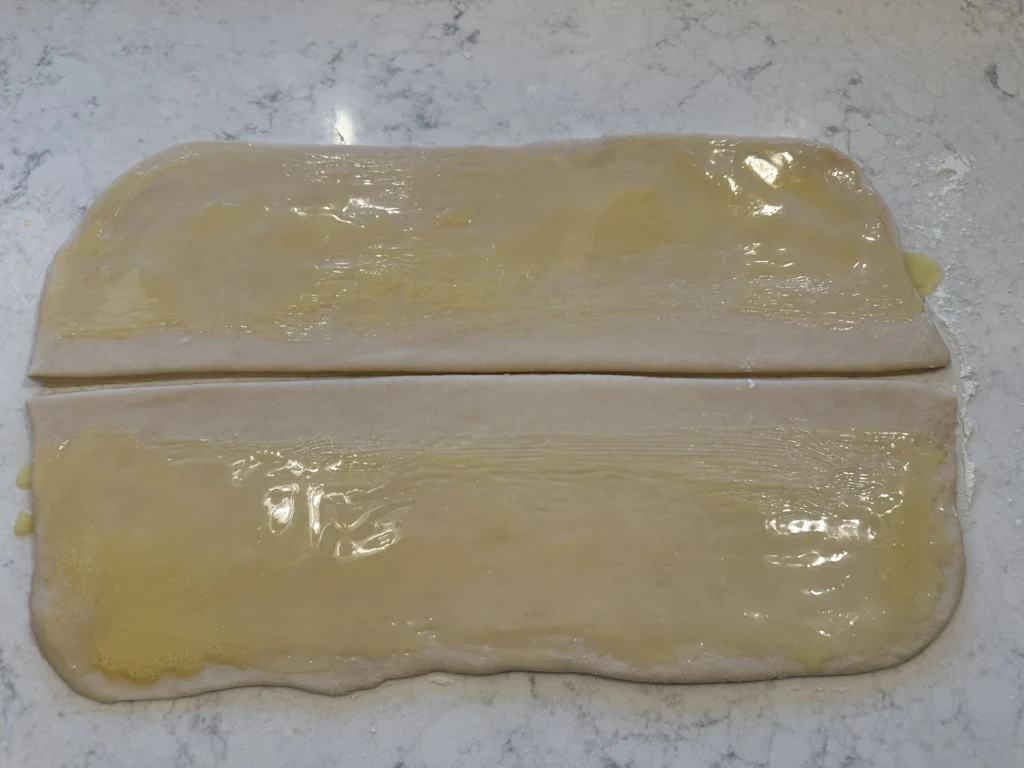
Brush melted butter over each section, leaving one long edge unbuttered on each piece.
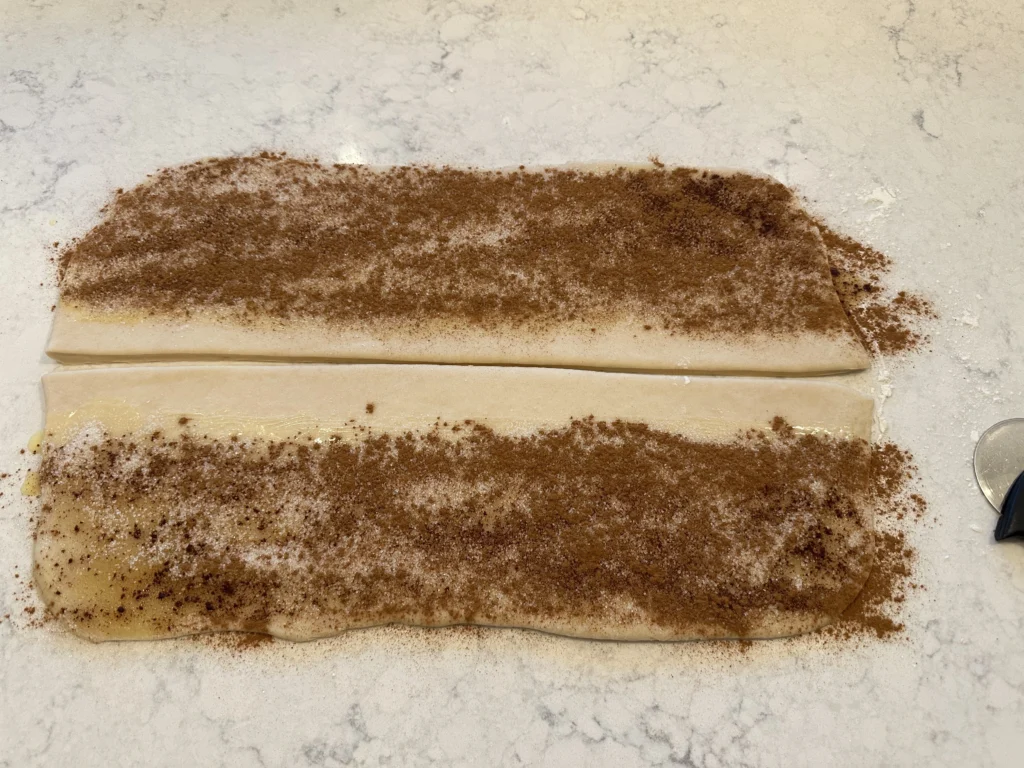
Sprinkle sugar evenly over the buttered areas (¼ cup per section), then sprinkle 1–2 teaspoons cinnamon over each.
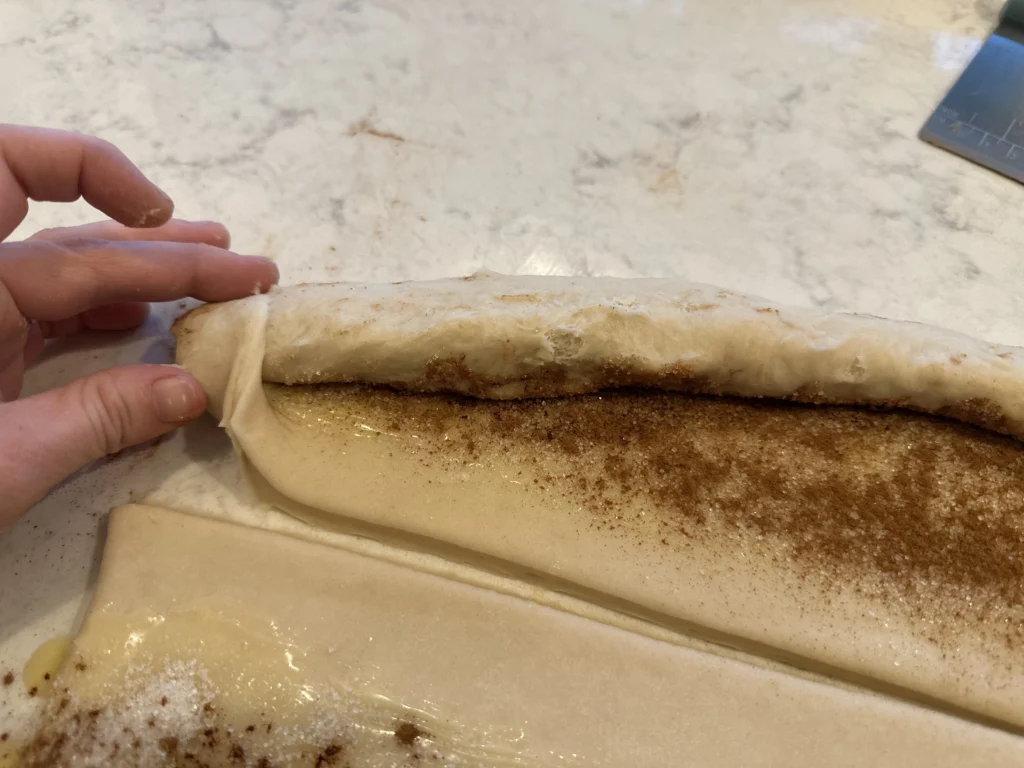
Starting at the long edge with cinnamon sugar to the edge, roll each piece into a long log similarly to the way you roll up cinnamon rolls, pinching the unbuttered edge to seal.
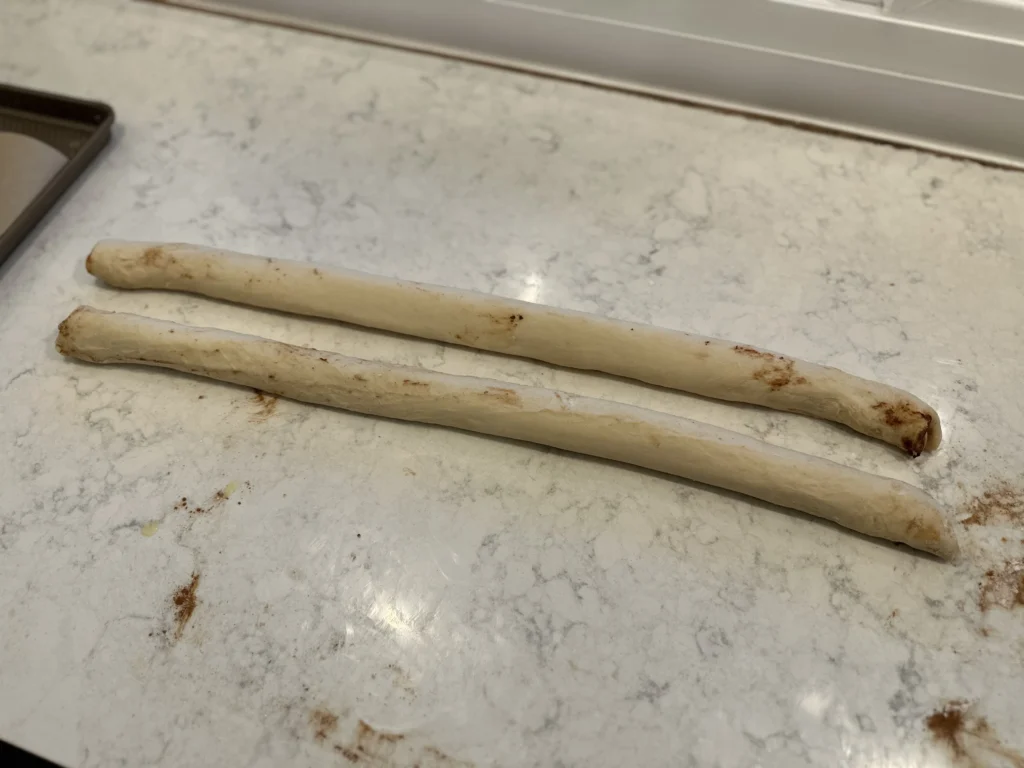
Repeat with the second piece.
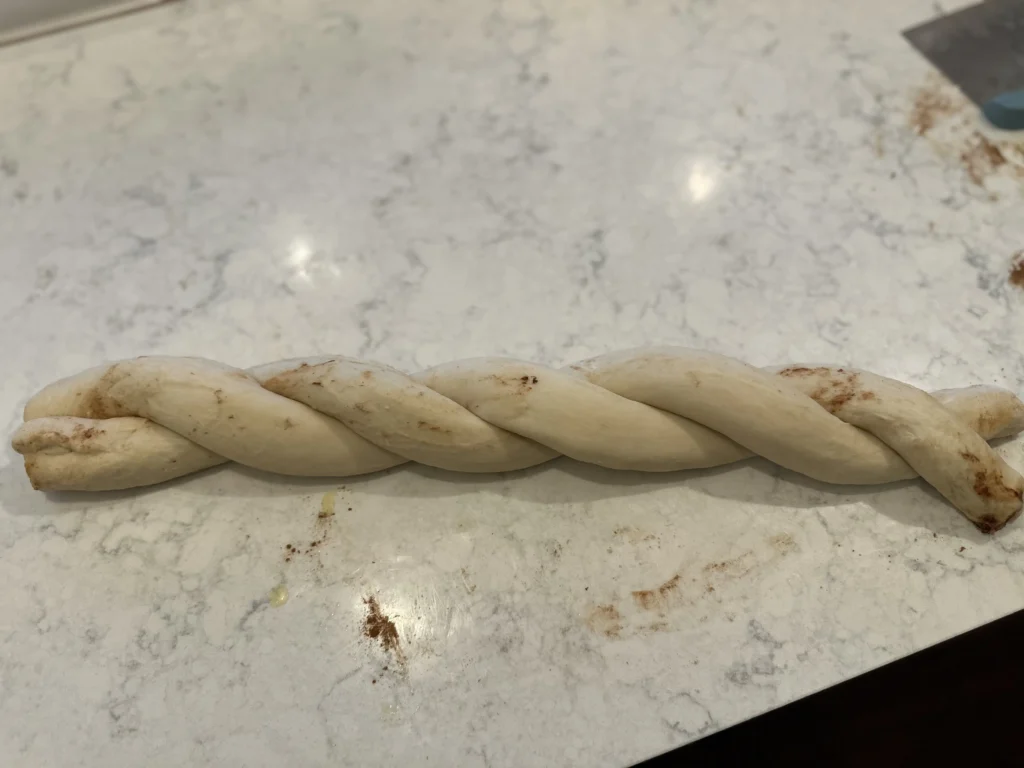
Twist the two logs together to form a rope braid. Transfer to the prepared baking sheet, shape into an oval, and pinch the ends together.
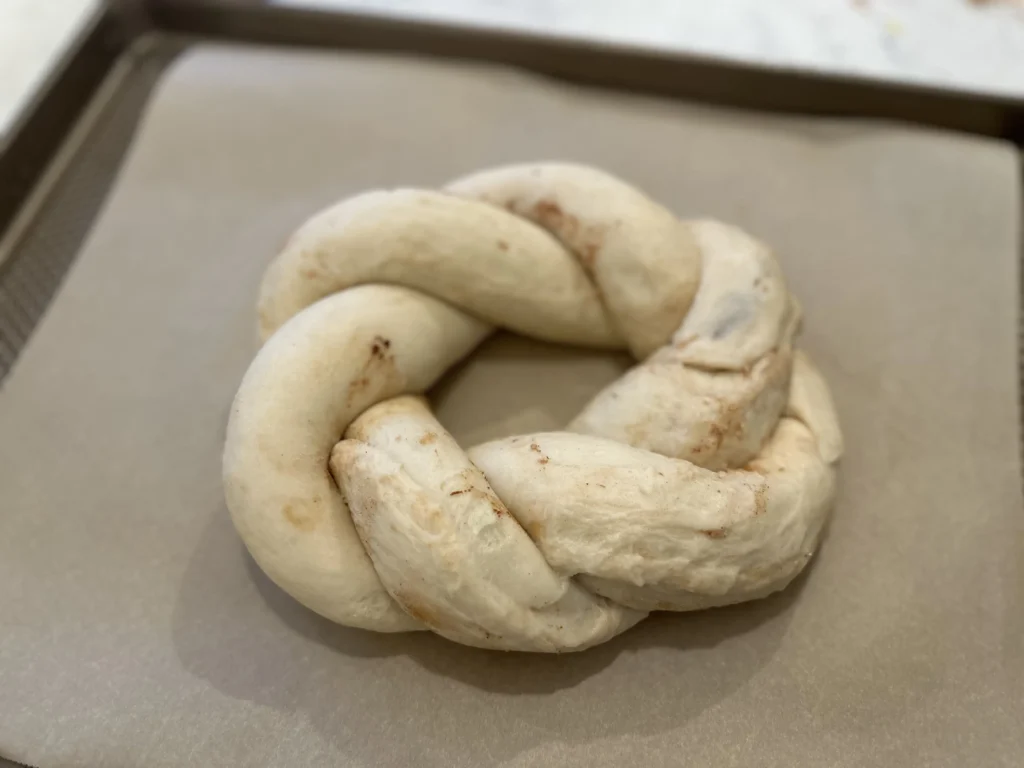
Brush lightly with butter, cover loosely with plastic wrap, and let rise until puffy, about 6–12 hours.
Bake
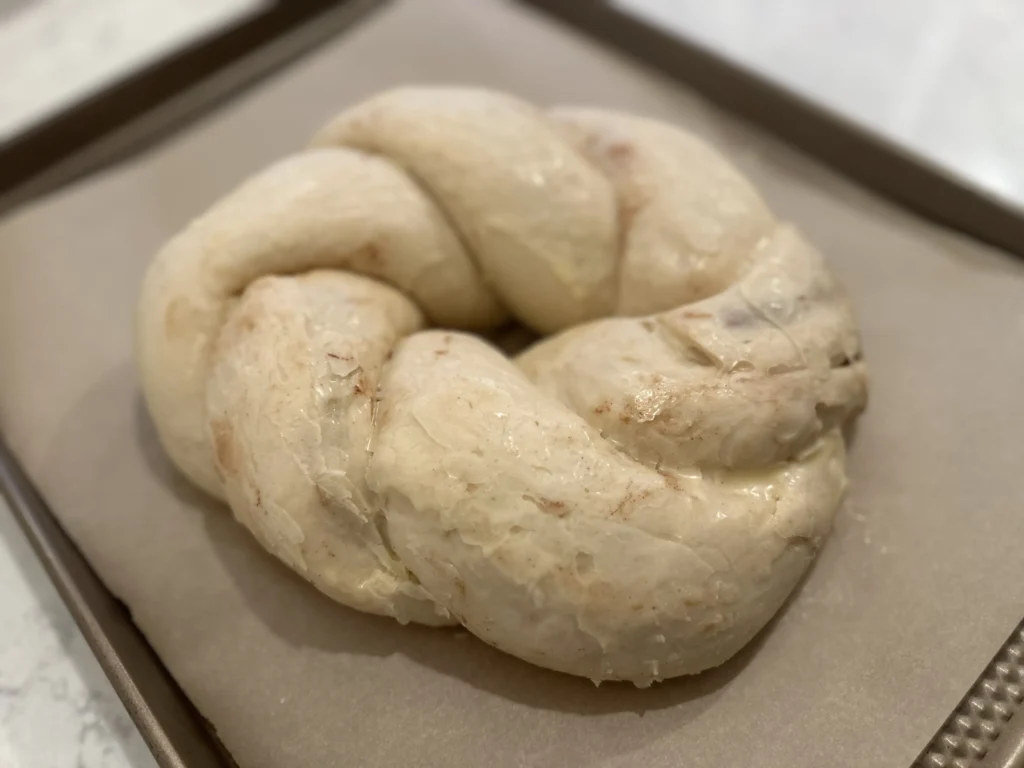
After second rise, preheat the oven to 350°F.
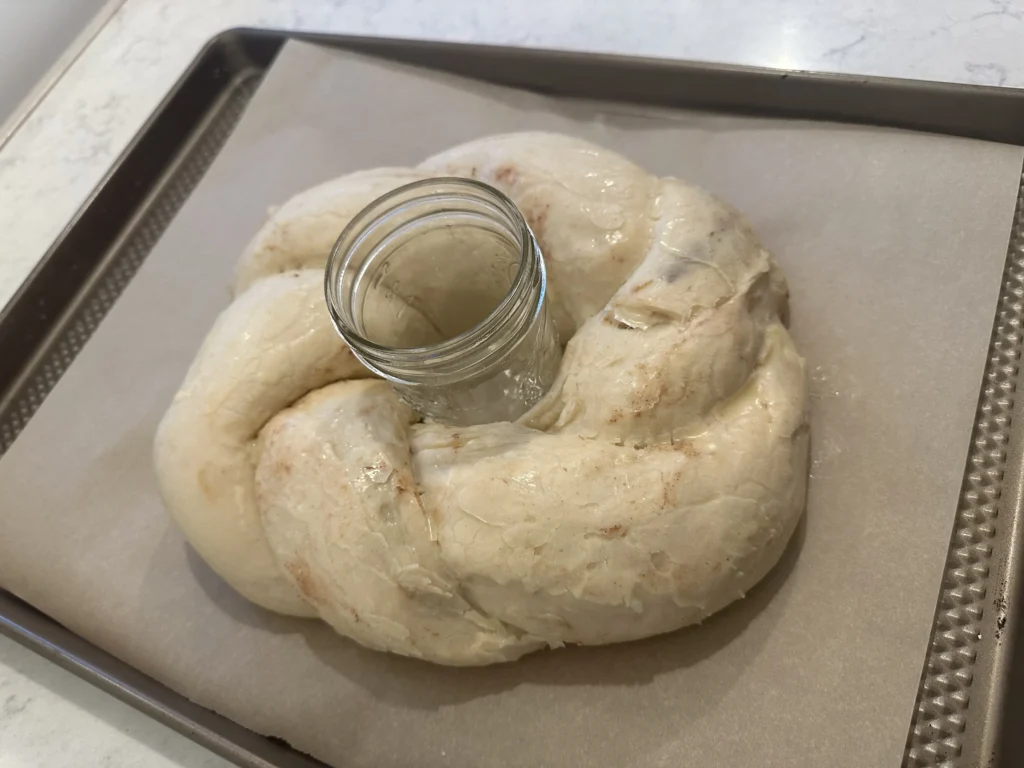
If the center looks like it may close during baking, place a small oven-safe bowl or jar in the middle.
Bake for 25–30 minutes, until golden brown. The cake is done when it reaches 190–195°F internally.
Baste the top of the cake with butter while it is still warm.
Cool completely before frosting if you want the icing to stay thick, or ice when still warm for a thiner glaze that melts off the sides.
Ice and Decorate
Beat powdered sugar, milk, melted butter, and vanilla until smooth and pourable.
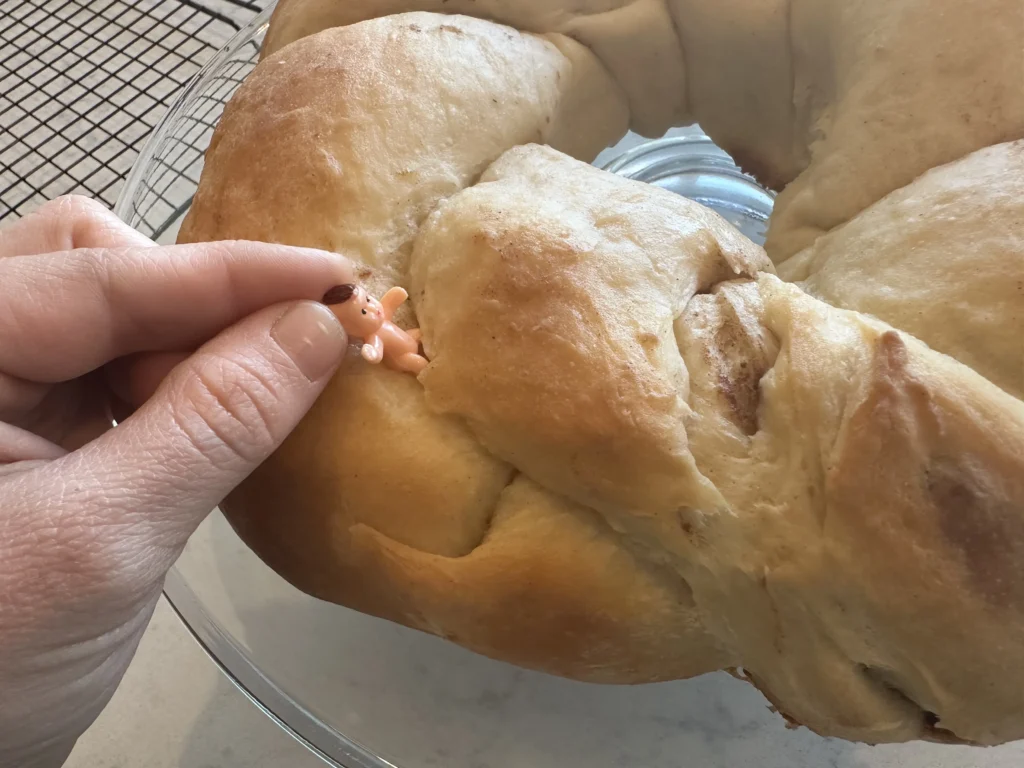
Insert the plastic baby into a crack where the braided dough meets, pushing it down to hide it.
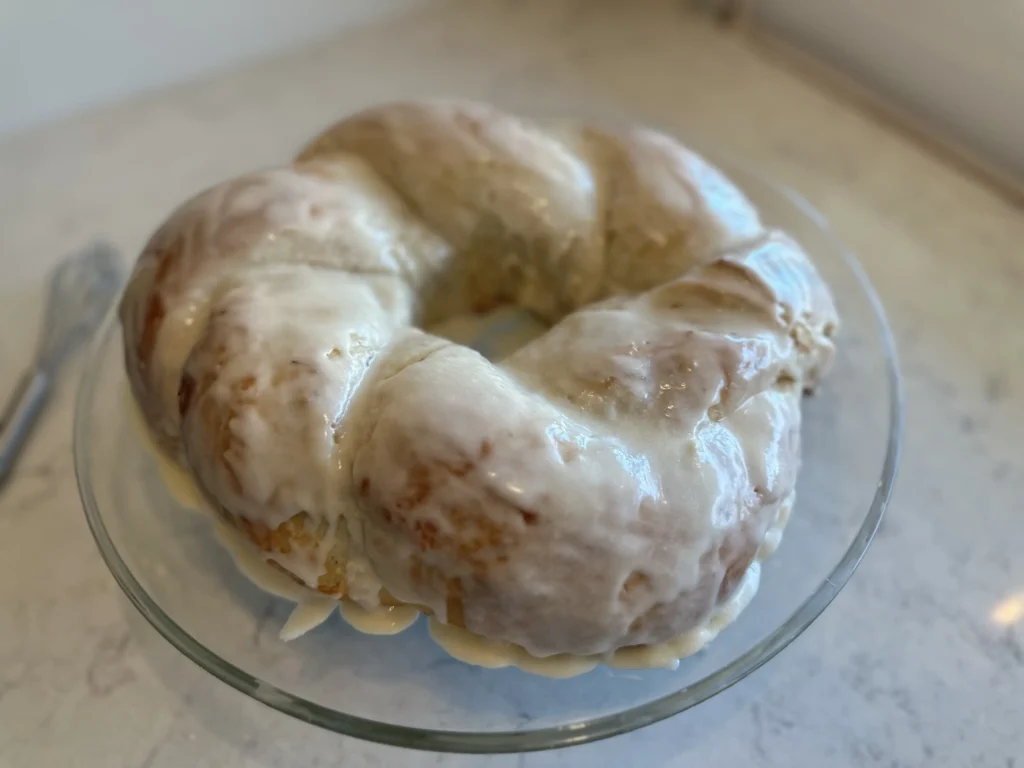
Drizzle frosting over the cake and immediately sprinkle with purple, green, and gold sugar before the frosting sets, this happens quicker than you might expect.
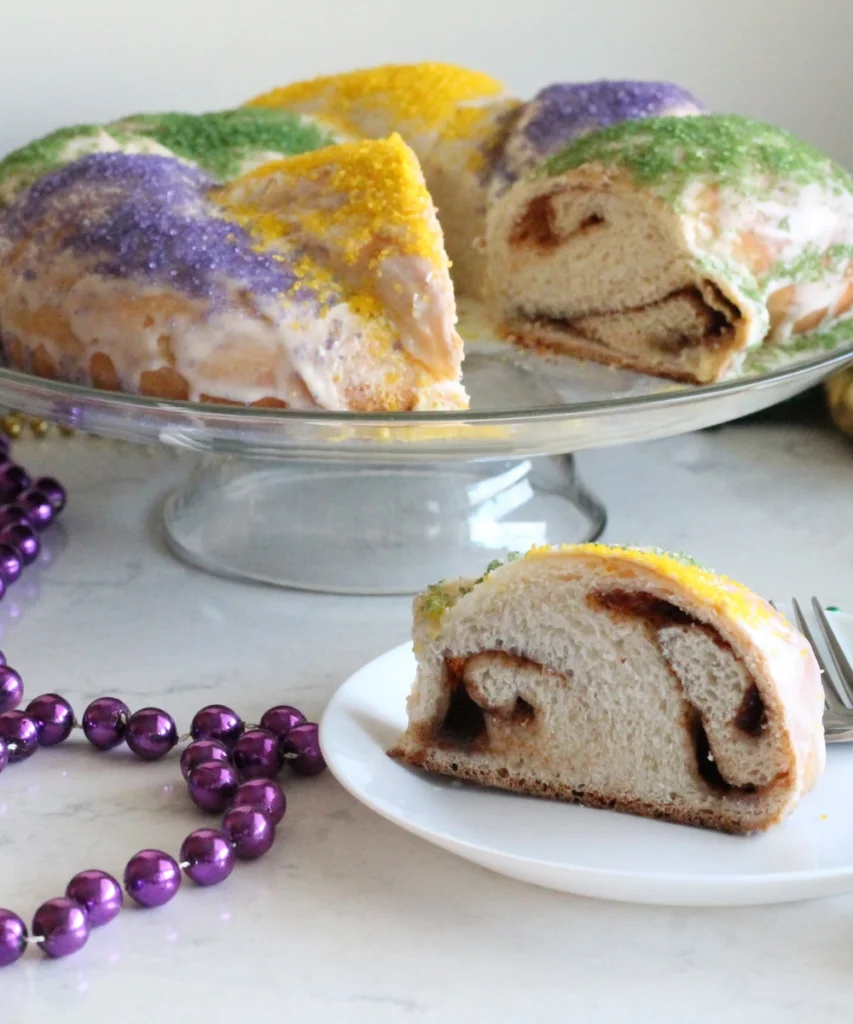
Slice and Serve
Slice and serve your king cake and enjoy the tradition. Whoever finds the baby gets bragging rights—and usually the job of making the king cake next year.
Filling Options
This king cake is written with a classic cinnamon sugar filling, but one of the best things about king cake is how easy it is to customize. If you’d like to change things up, here are a few popular filling ideas that work well with this dough.
Classic Cinnamon Sugar
This is the filling I chose. The traditional cinnamon sugar filling is simple, reliable, and always a crowd favorite. It lets the soft sourdough shine while still delivering that familiar king cake flavor.
Cream Cheese Filling
For a richer filling, spread a thin layer of sweetened cream cheese over the dough before adding the cinnamon sugar. This creates a soft, cheesecake-like center that pairs beautifully with the vanilla glaze.
Fruit Filling
Fruit fillings are common in many king cakes. A thin layer of fruit filling—such as strawberry, blueberry, or cherry—can be added along with or in place of the cinnamon sugar. Be careful not to overfill, as too much moisture can leak during baking.
Chocolate
For a more dessert-style king cake, sprinkle mini chocolate chips over the cinnamon sugar before rolling. The chocolate melts into the layers and adds a fun twist that kids especially love.
Nut Filling
Finely chopped pecans or walnuts can be sprinkled over the cinnamon sugar for added texture and flavor. Keep the pieces small so the dough still rolls and seals easily.
FAQ
How do I prevent the filling from leaking out?
The best way to prevent filling from leaking is to leave one long edge of the dough unbuttered before rolling. This gives the dough something dry to seal to as you roll it up. Roll the dough snugly (but not too tight), and pinch the seam closed well. Avoid overfilling, especially if using fruit or cream cheese, since excess moisture is more likely to escape during baking.
Does this potato flake sourdough king cake taste sour?
No. Potato flake sourdough produces a very mild, slightly sweet flavor that works beautifully in enriched doughs.
How active should my starter be?
Your starter should be active and bubbly. Feed it about 24 hours ahead of time for it to become nice and active before mixing the dough.
Can I make this overnight?
Yes. The long fermentation times make this a great recipe to start one day and bake the next. Cooler kitchens may need the full rise times.
Why does the rise time vary so much?
Rise time depends on your starter strength, room temperature, and humidity. Always go by how the dough looks rather than the clock.
How should I store leftovers?
Store covered at room temperature. This cake is best the day it’s made but stays soft for a short time after. If you make the cake ahead of time but don’t ice it, you can wrap it up and store in the freezer. Allow it to come to room temperature and ice it before serving.
Pin for later and share with a friend:
If you give this recipe a try, I would greatly appreciate if you came back and gave it a 5-star review! It helps me out so much!
I also love seeing all of the delicious creations you make! Share your photo over on instagram or facebook and give me a tag @littletennesseehome

Potato Flake Sourdough King Cake
Equipment
- Stand mixer with dough hook (or a large bowl and strong hands)
- measuring cups and spoons
- Microwave-safe bowl
- Dough scraper (optional but helpful when rolling the dough up if sticking to the work surface)
- Rolling Pin
- Pizza cutter or sharp knife
- Pastry brush
- Parchment Paper
- Large baking sheet
- Plastic wrap
- Digital thermometer (recommended)
- Small oven-safe bowl or jar (optional, to keep the center open)
Ingredients
Dough
- ½ cup milk 125 grams
- 3 Tablespoons coconut oil 42 grams
- ½ Tablespoon salt 9 grams
- 1 cup active potato flake starter
- ¼ cup sugar (50 grams)
- 1 large egg room temperature
- 3 Tablespoons potato flakes
- 1 teaspoon vanilla extract
- 4 cups bread flour-scooped and leveled (480 grams) OR 4 cups all-purpose flour (480 grams) with 2 Tablespoons vital wheat gluten (17 grams) added
Cinnamon Filling
- ½ cup sugar
- 2 –3 teaspoons ground cinnamon
- 4 Tablespoons salted butter melted
Frosting
- 1 –2 cups powdered sugar depending on desired thickness
- 2 Tablespoons milk
- 1 Tablespoon salted butter melted
- 1 teaspoon vanilla extract
Extras
- One small plastic baby
- Dye-free sugar sprinkles purple, green, and yellow/gold
Instructions
- Begin by heating the milk and coconut oil together in a microwave-safe bowl for 60–90 seconds, just until lukewarm (about 100°F).
- In the bowl of a stand mixer fitted with a dough hook, add the potato flake starter, warm milk and coconut oil, vanilla extract, salt, room-temperature egg, sugar, and potato flakes. Mix briefly on low speed until combined.
- With the mixer still on low, gradually add the flour until a dough forms. Scrape down the sides of the bowl to make sure it is all incorporated.
- Once all the flour has been added, knead on low speed for 6–10 minutes. The dough should be smooth and slightly tacky but not overly sticky.
- Cover the bowl with plastic wrap and let the dough rise at room temperature until almost doubled, about 6–10 hours.
- After the first rise, line a large baking sheet with parchment paper.
- Turn the dough out onto a lightly floured surface. Before rolling press the dough into a rectangular shape first, getting it as close to the size and shape you can with your hands first. Now, roll until you get a large rectangle, roughly 11 × 18 inches. Using a pizza cutter, divide the dough lengthwise into two long rectangles.
- Brush melted butter over each section, leaving one long edge unbuttered on each piece. Sprinkle sugar evenly over the buttered areas (¼ cup per section), then sprinkle 1–2 teaspoons cinnamon over each.
- Starting at the long edge with cinnamon sugar to the edge, roll each piece into a long log similarly to the way you roll up cinnamon rolls, pinching the unbuttered edge to seal. Repeat with the second piece.
- Twist the two logs together to form a rope braid. Transfer to the prepared baking sheet, shape into an oval, and pinch the ends together.
- Brush lightly with butter to prevent the plastic wrap from sticking, cover loosely with plastic wrap, and let rise until puffy, about 6–12 hours.
- After the second rise, preheat the oven to 350°F.
- If the center looks like it may close during baking, place a small oven-safe bowl or jar in the middle.
- Bake for 25–30 minutes, until golden brown. The cake is done when it reaches 190–195°F internally.
- Brush the top of the cake with butter while it is still warm.
- Cool completely before frosting if you want the icing to stay thick, or ice when still warm for a thiner glaze that melts off the sides.
- Beat powdered sugar, milk, melted butter, and vanilla until smooth and pourable.
- Insert the plastic baby into a crack where the braided dough meets, pushing it down to hide it.
- Drizzle frosting over the cake and immediately sprinkle with purple, green, and gold sugar before the frosting sets, this happens quicker than you might expect.
- Slice and serve your king cake and enjoy the tradition. Whoever finds the baby gets bragging rights—and usually the job of making the king cake next year.