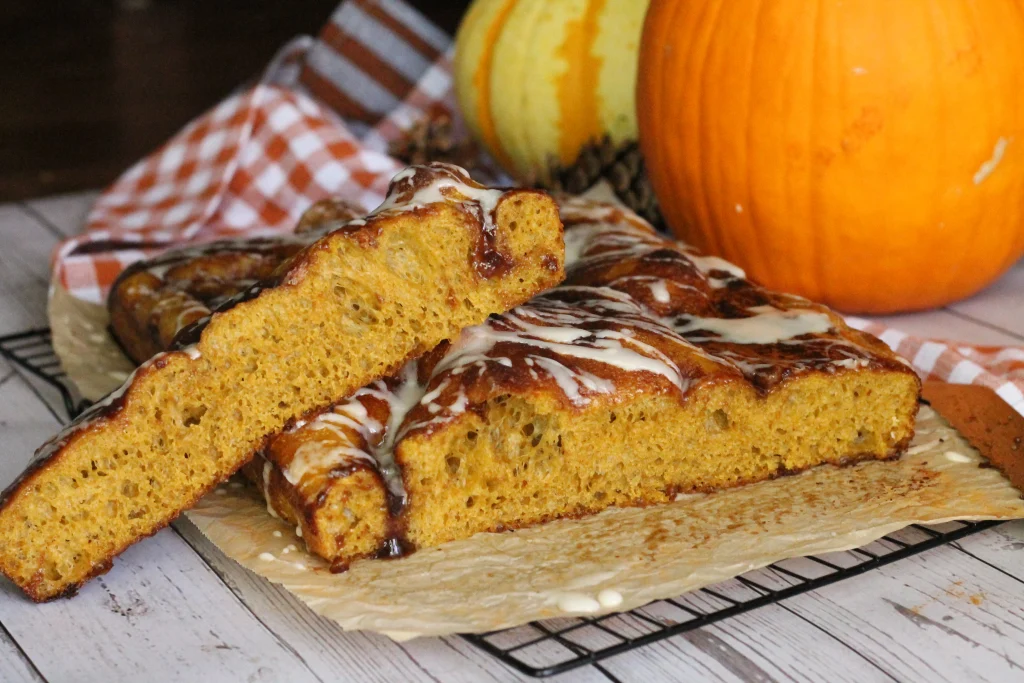
If you love pumpkin cinnamon rolls but don’t necessarily want to spend the time rolling and shaping individual cinnamon rolls, you are going to love this Potato Flake Sourdough Pumpkin Cinnamon Focaccia!
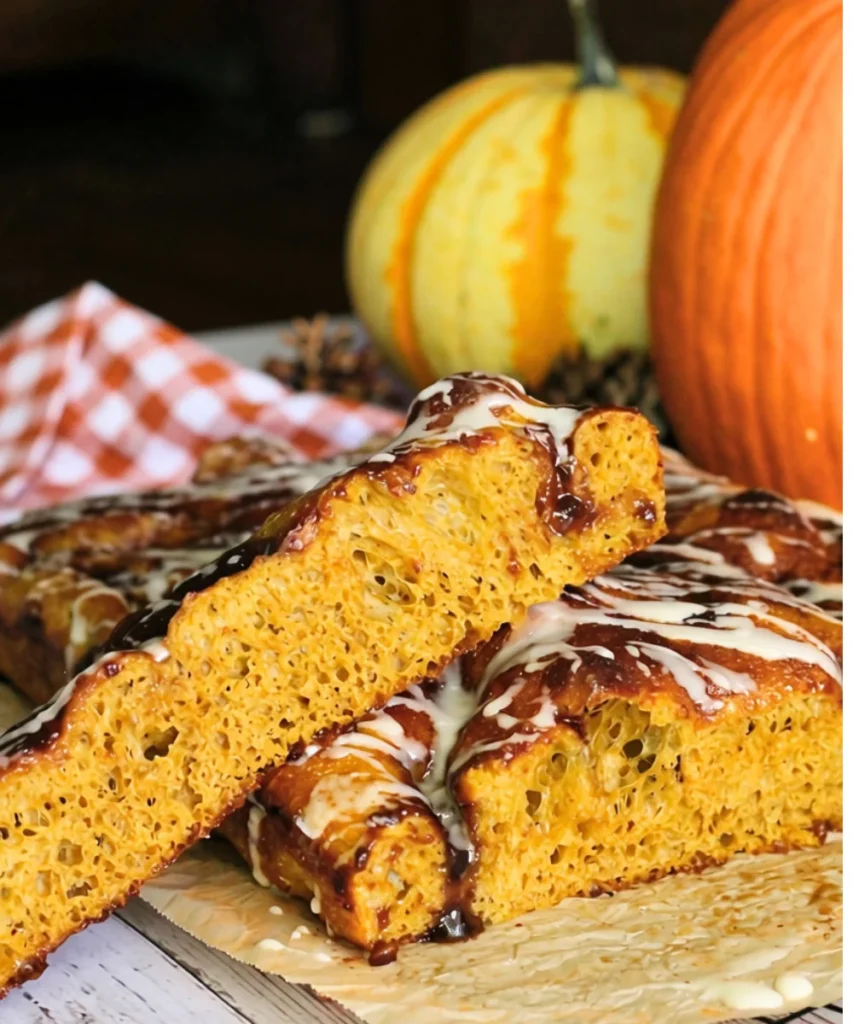
This sweet focaccia is made with active potato flake sourdough starter, real pumpkin purée, warm fall spices, and a delicious buttery cinnamon sugar topping. After baking, it is finished with a simple vanilla glaze that adds just the right amount of sweetness.
The inside is soft, fluffy, and moist from the pumpkin, while the outside develops a slightly crisp, buttery crust. And all those little dimples in the focaccia? They are perfect for holding pockets of cinnamon sugar goodness!
Unlike traditional savory focaccia, this version is more of a sweet breakfast bread or dessert. It has all those delicious fall flavors that I love, but with a simple preparation that doesn’t require any rolling, twisting, or complicated shaping. Perfect for fall gatherings!
And, of course, it is naturally fermented using my favorite potato flake sourdough starter!
What Is Pumpkin Cinnamon Focaccia?
Traditional focaccia is an Italian flatbread known for its soft, airy texture, golden crust, and signature dimples across the surface. It is usually made with olive oil and savory toppings, but focaccia can also be made into a delicious sweet bread!
For this recipe, I decided to give traditional focaccia a fall-inspired twist by incorporating pumpkin purée and pumpkin spice directly into the dough.
Instead of topping it with herbs and salt, I use a buttery brown sugar and cinnamon mixture that settles into the dimples as the bread bakes.
The result is almost like a cross between a cinnamon roll and a fluffy focaccia bread!
One of my favorite things about making focaccia is how little shaping is involved. The dough is supposed to be soft and sticky, and there is no need to try to form a perfect loaf.
Why You’ll Love This Recipe
- Naturally fermented: Made with active potato flake sourdough starter, allowing the dough to ferment and develop flavor over time.
- Perfect for fall: Pumpkin, cinnamon, and pumpkin pie spice bring all those cozy fall flavors together.
- No complicated shaping: There is no need to roll out the dough or make individual cinnamon rolls.
- Soft and fluffy: Pumpkin purée adds moisture and creates a tender crumb.
- Delicious cinnamon sugar topping: The buttery brown sugar mixture settles into the dimples of the dough, creating sweet pockets throughout the focaccia.
- Great for breakfast or dessert: Enjoy a slice alongside your morning coffee or serve it as a sweet treat after dinner.
Ingredients for Potato Flake Sourdough Pumpkin Cinnamon Focaccia
For the Dough
- 3 cups bread flour (420 grams): Bread flour gives the dough structure and helps create that signature chewy, airy focaccia texture.
- 1 teaspoon salt: Helps balance the sweetness and enhances the overall flavor.
- 1/2 cup active potato flake sourdough starter: This is what naturally leavens our bread. Be sure your starter is active and ready to use.
- 2 tablespoons melted butter: Adds richness and a delicious buttery flavor that pairs perfectly with the pumpkin and warm spices.
- 1 cup pumpkin purée (256 grams): Gives the focaccia moisture, a beautiful orange color, and a subtle pumpkin flavor. Be sure to use plain pumpkin purée, not pumpkin pie filling.
- 1 tablespoon pumpkin pie spice: Adds those warm fall flavors throughout the dough.
- 1/4 cup warm water: Helps bring the dough together and provides additional hydration.
- 1/4 teaspoon maple extract: Adds a hint of maple flavor that complements the pumpkin and cinnamon without adding extra sugar.
Maple extract substitution: If you don’t have maple extract, you can substitute 1/4 cup maple syrup for the 1/4 cup of water and omit the extract. Keep in mind that this will increase the sweetness of the bread. You may want to reduce the amount of cinnamon sugar topping or vanilla frosting to balance the added sweetness.
For Preparing the Pan
- 1 tablespoon melted butter: Used to grease the baking pan and help create a delicious buttery crust along the bottom and edges of the focaccia.
For the Cinnamon Sugar Topping
- 5 tablespoons melted butter: Creates a rich, buttery topping that settles into the dimples of the focaccia.
- 1/2 cup brown sugar: Adds sweetness and a delicious caramel-like flavor.
- 2 teaspoons ground cinnamon: Gives the topping that classic cinnamon roll flavor.
- 1 teaspoon pumpkin pie spice: Adds an extra layer of warm fall spices.
For the Vanilla Frosting
- 1/2 cup powdered sugar: Creates the sweet base for our frosting.
- 1 tablespoon milk: Thins the frosting to a drizzleable consistency.
- 1/2 teaspoon vanilla extract: Adds delicious vanilla flavor.
- Pinch of salt: Helps balance the sweetness.
Butter Tip: This entire recipe uses exactly 8 tablespoons of butter, which is equal to 1/2 cup or one standard stick of butter! You’ll use 2 tablespoons in the dough, 1 tablespoon to prepare the pan, and 5 tablespoons for the cinnamon sugar topping.
Tools Needed
One thing I love about this recipe is that you don’t need any special bread-shaping tools. Most of these items are probably already in your kitchen!
AS an amazon associate, this post may contain affiliate links, which means I may make a small commission at no extra cost to you. When you make a purchase through my link, you help me to keep Little Tennessee Home up and running! Thank you for your support! See my full disclosure here.
- Stand mixer with dough hook attachment: Makes mixing and kneading this wet, sticky dough much easier.
- Large mixing bowl: For allowing the dough to ferment and double in size.
- Plastic wrap: Helps prevent the dough from drying out during fermentation.
- 9×13-inch baking pan: I love using my USA Bakeware pans for recipes like this! They bake evenly and release beautifully.
- Small saucepan: For melting the butter and preparing the cinnamon sugar topping.
- Measuring cups and spoons: For measuring all the ingredients.
- Kitchen scale: I always recommend using a kitchen scale when possible, especially when measuring flour. It makes it much easier to get consistent results.
- Whisk: For combining the dry ingredients and mixing the vanilla frosting.
- Instant-read thermometer: This is one of my favorite tools for checking when bread is finished baking.
- Wire cooling rack: Allows the focaccia to cool without trapping moisture underneath.
How to Make Potato Flake Sourdough Pumpkin Cinnamon Focaccia
Be sure to see the full recipe card at the bottom to print for free!
Combine the Dry Ingredients
In the bowl of a stand mixer, add the bread flour, salt, and pumpkin pie spice.

Use a whisk to thoroughly combine the dry ingredients.
I like to do this before adding any of the wet ingredients because it helps evenly distribute the salt and spices throughout the flour. That way, we don’t end up with any areas of dough that have more spice or salt than others.
Add the Wet Ingredients and Knead

Add the pumpkin purée, active potato flake sourdough starter, 2 tablespoons of melted butter (cooled slightly), warm water, and maple extract to the dry ingredients.
Using the dough hook attachment, mix on low speed until all the ingredients are combined.

Once everything is incorporated, increase the mixer to medium speed and continue kneading until a smooth but sticky dough forms.
You may need to stop the mixer occasionally and scrape down the sides of the bowl to make sure everything is thoroughly mixed.
This is going to be a very wet dough!
If you’re used to making my regular potato flake sourdough sandwich bread, this dough will feel quite different. Focaccia dough is supposed to have a higher moisture content, which helps create that soft, airy texture when baked.
Don’t be tempted to keep adding flour just because the dough feels sticky!
Allow the Dough to Ferment

Remove the dough from the bowl, and lightly oil your mixing bowl or lightly coat it with butter and transfer the dough into it.
Cover the bowl with plastic wrap to prevent the surface of the dough from drying out.
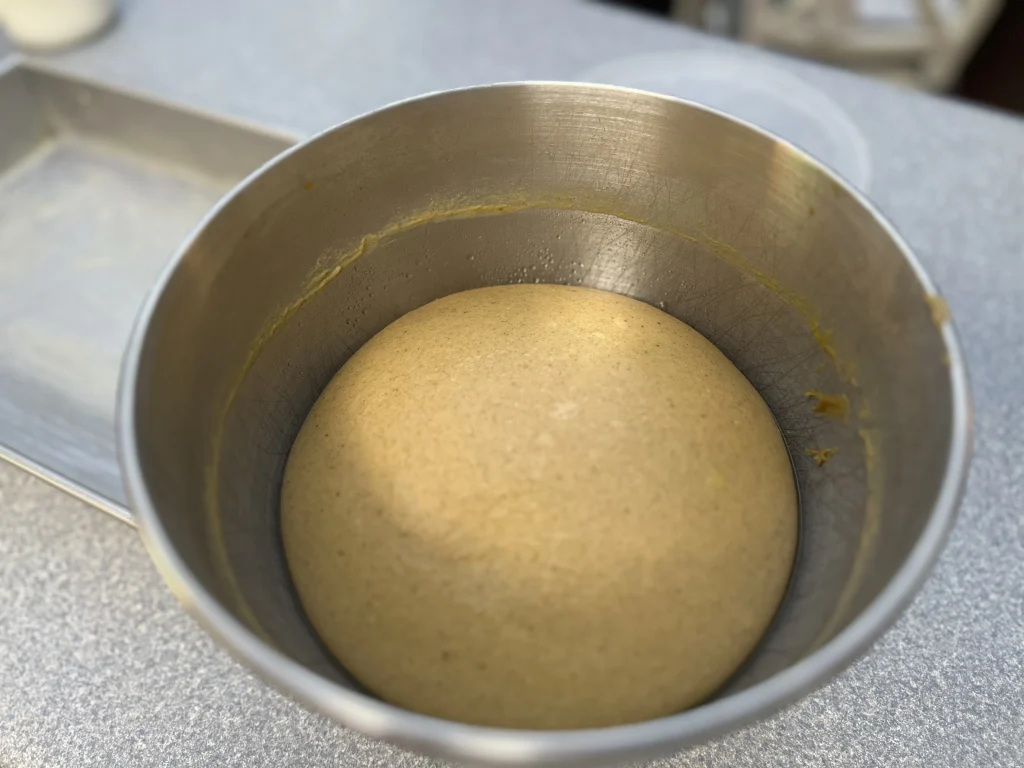
Allow the dough to ferment at room temperature for approximately 6–8 hours, or until doubled in size.
As with all potato flake sourdough recipes, fermentation time will vary depending on the temperature of your home and the activity of your starter.
A warmer kitchen will typically produce a faster rise, while a cooler kitchen may require additional time.
Instead of watching the clock too closely, watch your dough!
You want it to become noticeably larger and airy before moving on to the next step.
Prepare the Baking Pan
After the first fermentation, melt 1 tablespoon of butter and brush it evenly over the bottom and sides of a 9×13-inch baking pan. You can also use parchment paper to line your pan to make removal super easy and clean up a breeze!

I love using my USA Bakeware pans because they provide such even baking and make removing the finished focaccia so easy.
Transfer the fermented dough to the center of the prepared pan.
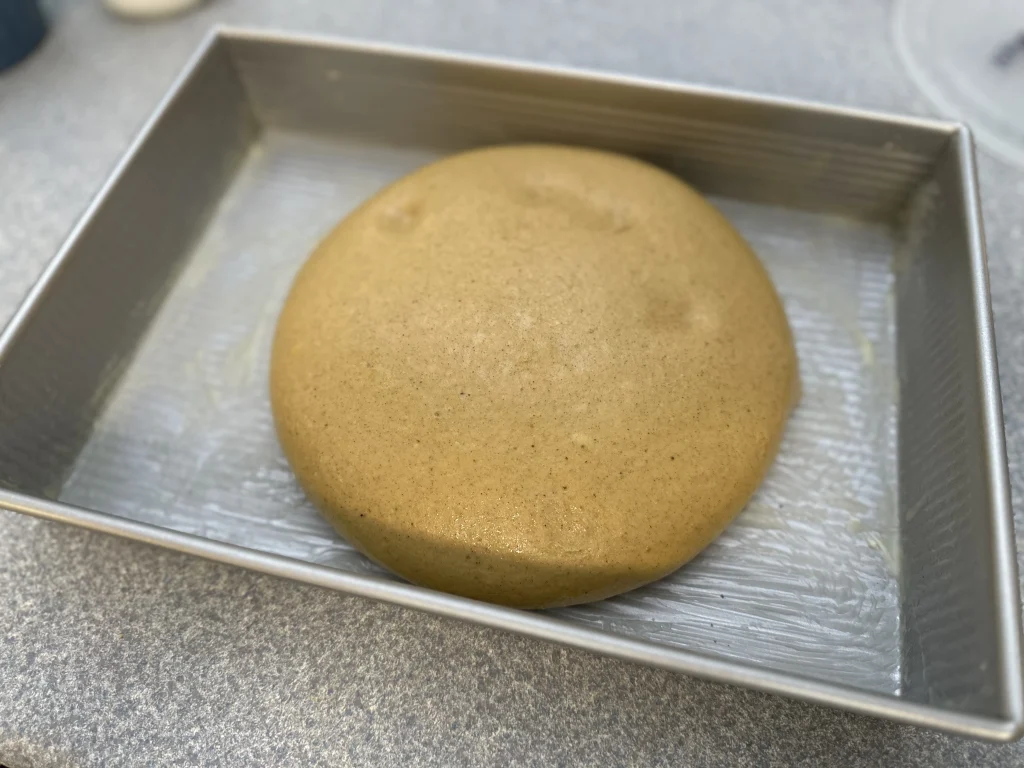
Dip your fingers in the melted butter, or lightly wet them with water, and gently press the dough outward until it reaches the edges of the pan.
You may find that the dough wants to spring back a little. Just work gently and avoid forcing it.
This is not the dimpling step yet!

Right now, we are simply spreading the dough into the pan so that it can complete its second rise.
Allow the Dough to Rise Again
Cover the baking pan with plastic wrap or a clean kitchen towel.
Let the dough rise for approximately 4–6 hours, until doubled in size.
The dough should fill, or nearly fill, the baking pan and look noticeably puffy.

Again, this time can vary depending on the temperature of your kitchen and the strength of your starter.
This second rise is important because it gives the focaccia its light, fluffy texture.
Prepare the Cinnamon Sugar Topping
Near the end of the second rise, preheat your oven to 450°F.
In a small saucepan over low heat, melt the 5 tablespoons of butter reserved for the topping.
Remove the saucepan from the heat and stir in the brown sugar, cinnamon, and pumpkin pie spice until thoroughly combined.
This mixture will create that delicious buttery cinnamon sugar topping!
Add the Topping and Dimple the Dough

Drizzle the cinnamon sugar mixture evenly over the top of the risen dough.
Now comes the fun part!
Using your fingers, press deep dimples all over the surface of the dough.
You can dip your fingers directly into the buttery topping to help prevent sticking. If the dough begins sticking to your fingers, lightly wet them with water and continue.
Press down firmly enough to create deep pockets, but try not to tear the dough.
The cinnamon sugar mixture will settle into those little pockets and create delicious areas of buttery sweetness throughout the bread.

Don’t worry if your dough looks a little messy after dimpling! That is completely normal.
Unlike a loaf of sandwich bread, focaccia isn’t supposed to look perfectly smooth. Those dimples and uneven areas are part of what makes it so delicious.
Bake the Focaccia
Place the pan into the preheated 450°F oven.
Bake for approximately 15 minutes, or until the focaccia is golden and crusty on top.
For the most accurate way to check for doneness, insert an instant-read thermometer into the bread portion of the focaccia.
The internal temperature should reach approximately 190–200°F.
Keep in mind that the cinnamon sugar topping can make the surface appear darker than a traditional focaccia, so checking the internal temperature is especially helpful.
Remove the pan from the oven and allow the focaccia to cool for approximately 10 minutes.
Then carefully transfer it to a wire cooling rack to finish cooling.
Prepare the Vanilla Frosting
While the focaccia cools, prepare the simple vanilla frosting.
In a small bowl, combine the powdered sugar, milk, vanilla extract, and a pinch of salt.
Whisk everything together until smooth.
If the frosting is thicker than you prefer, add a little additional milk until it reaches your desired consistency.
I like a frosting that is thin enough to drizzle but still thick enough to leave visible ribbons across the top of the bread.
Frost and Serve
Once the focaccia has cooled, drizzle the vanilla frosting evenly over the top.

Slice into squares and enjoy!
This bread is delicious served as a sweet breakfast treat, an afternoon snack with coffee, or even a simple fall dessert.
Helpful Tips for Making Pumpkin Cinnamon Focaccia
Use Active Potato Flake Sourdough Starter
For the best rise, make sure your potato flake sourdough starter is active and ready to use.
Because this recipe relies on the natural yeast in the starter rather than commercial yeast, the activity of your starter makes a big difference in how quickly the dough ferments.
Don’t Add Too Much Flour
This dough is much wetter and stickier than many of my other potato flake sourdough recipes.
That is intentional!
The moisture in the dough contributes to the light, airy texture that we want in focaccia.
While it may be tempting to add extra flour to make the dough easier to handle, doing so can change the final texture of the bread.
Be Patient With the Rise Times
I know I mention this frequently in my sourdough recipes, but it really is important!
Fermentation times are simply estimates.
A dough that takes six hours to rise in my kitchen may take eight hours or longer in yours.
The temperature of your home, the strength of your starter, and even the temperature of your ingredients can affect how quickly your bread rises.
Watch the dough rather than relying completely on the clock.
Use Plain Pumpkin Purée
Be sure you are using plain pumpkin purée and not pumpkin pie filling.
Pumpkin pie filling already contains added sugar and spices, which would change the overall sweetness and flavor of this recipe.
Fill free to make homemade pumpkin purée, but be cautious that it doesn’t contain too much moisture which can affect the wetness of the dough. If it more liquid than canned pumpkin, omit the 1/4 cup water in the recipe.
Don’t Skip the Dimpling
The dimples are one of the things that make focaccia so unique!
Not only do they create the traditional focaccia appearance, but they also provide places for the buttery cinnamon sugar mixture to settle as the bread bakes.
Those little pockets of cinnamon sugar are one of my favorite parts of this recipe.
Check the Internal Temperature
Because the topping contains brown sugar, it can become golden and darker in color fairly quickly.
Rather than relying entirely on appearance, I recommend checking the internal temperature of the bread.
A temperature of 190–200°F is a helpful indicator that the focaccia is finished baking.
Just be sure to insert the thermometer into the bread itself rather than a pocket of melted cinnamon sugar.
Adjust the Sweetness to Your Preference
I love the combination of pumpkin, cinnamon, maple, and vanilla in this recipe.
However, if you use maple syrup in place of the water and maple extract, your dough will be sweeter.
You may prefer to use a little less of the cinnamon sugar topping or skip some of the vanilla frosting.
This is an easy way to adjust the recipe to suit your family’s preferences.

Frequently Asked Questions
Can I Make This Recipe Without a Stand Mixer?
Yes! A stand mixer makes working with the sticky dough much easier, but you can mix the ingredients by hand in a large bowl.
Because the dough is very wet, it will be more difficult to knead using traditional bread-kneading methods.
Instead, you can work the dough using a sturdy spoon or wet hands until the ingredients are thoroughly incorporated and the dough becomes smoother and more cohesive.
Why Is My Focaccia Dough So Sticky?
Focaccia is a higher-hydration bread, meaning it contains more moisture than many traditional bread doughs.
The pumpkin purée also contributes additional moisture.
This stickiness is completely normal and helps create the bread’s soft interior.
Can I Use Pumpkin Pie Filling Instead of Pumpkin Purée?
I wouldn’t recommend it.
Pumpkin pie filling typically contains added sugar and spices, which can affect the flavor, texture, and sweetness of the finished focaccia.
Plain pumpkin purée is the best choice for this recipe.
Can I Use Maple Syrup Instead of Maple Extract?
Absolutely!
If you don’t have maple extract, replace the 1/4 cup warm water with 1/4 cup maple syrup and omit the maple extract.
Just remember that maple syrup adds additional sweetness, while maple extract provides maple flavor without the added sugar.
You may want to adjust the topping or frosting accordingly.
How Do I Know When My Focaccia Is Ready to Bake?
After the second rise, the dough should have doubled in size and should look airy and puffy.
It should fill, or nearly fill, the baking pan.
If your dough hasn’t reached that point after the estimated rising time, give it a little longer.
How Should I Store Leftover Pumpkin Cinnamon Focaccia?
Allow the focaccia to cool completely before storing it.
Place leftovers in an airtight container and store at room temperature for approximately 1–2 days, provided your kitchen is cool.
For longer storage, freeze individual portions in an airtight freezer-safe container or bag. For the best appearance, freeze before adding the frosting if possible.
You can warm a slice slightly before enjoying it, which helps bring back that soft, fresh-baked texture.
A Delicious Fall Twist on Traditional Focaccia
If you’ve never tried making sweet focaccia before, this sourdough pumpkin focaccia is such a fun recipe to start with!
I love taking traditional bread recipes and finding ways to incorporate my potato flake sourdough starter, and this pumpkin cinnamon version is a delicious example.
Between the soft pumpkin bread, buttery cinnamon sugar topping, and simple vanilla frosting, it has so many of the cozy flavors of pumpkin flavors I love in a pumpkin season baked treat.
And the best part? No rolling out dough or shaping individual cinnamon rolls!
Although, we do love the potato flake sourdough pumpkin cinnamon rolls.
If you give this recipe a try, I would greatly appreciate if you came back and gave it a 5-star review! It helps me out so much!
I also love seeing all of the delicious creations you make! Share your photo over on instagram or facebook and give me a tag @littletennesseehome

Potato Flake Sourdough Pumpkin Cinnamon Focaccia
Ingredients
Dough
- 3 cups bread flour 420 g
- 1 teaspoon salt
- 1/2 cup active potato flake sourdough starter
- 2 tablespoons melted butter
- 1 cup pumpkin purée 256 g
- 1 tablespoon pumpkin pie spice
- 1/4 cup warm water
- 1/4 teaspoon maple extract
For Preparing the Pan
- 1 tablespoon melted butter
Cinnamon Sugar Topping
- 5 tablespoons melted butter
- 1/2 cup brown sugar
- 2 teaspoons cinnamon
- 1 teaspoon pumpkin pie spice
Vanilla Frosting
- 1/2 cup powdered sugar
- 1 tablespoon milk
- 1/2 teaspoon vanilla extract
- Pinch of salt
Instructions
- Combine dry ingredients. In the bowl of a stand mixer, whisk together the bread flour, salt, and pumpkin pie spice until evenly combined.
- Mix and knead. Add the pumpkin purée, active potato flake sourdough starter, 2 tablespoons melted butter (cooled slightly), warm water, and maple extract. Mix on low until combined, then increase to medium speed and knead until a smooth but very sticky dough forms. Scrape down the sides of the bowl as needed.
- First fermentation. Transfer the dough to a large, lightly greased bowl. Cover with plastic wrap and allow to ferment at room temperature for 6–8 hours, or until doubled in size.
- Prepare the pan. Melt 1 tablespoon of butter and brush over the bottom and sides of a 9×13-inch baking pan.
- Transfer the dough. Place the fermented dough into the prepared pan. With lightly wet or buttered fingers, gently press the dough toward the edges of the pan. Do not dimple the dough yet.
- Second rise. Cover with plastic wrap or a clean kitchen towel and allow to rise for 4–6 hours, or until doubled in size and the dough fills or nearly fills the pan.
- Prepare topping. Near the end of the rise, preheat the oven to 450°F. Melt 5 tablespoons of butter in a small saucepan over low heat. Remove from heat and stir in the brown sugar, cinnamon, and pumpkin pie spice.
- Top and dimple. Drizzle the cinnamon sugar mixture evenly over the risen dough. With wet or buttered fingers, press deep dimples across the entire surface. The dough may look messy after dimpling; this is normal.
- Bake. Bake at 450°F for approximately 15 minutes, until golden and crusty. Check that the internal temperature of the bread reaches 190–200°F.
- Cool. Allow the focaccia to cool in the pan for 10 minutes, then transfer to a wire cooling rack to cool completely.
- Prepare frosting. In a small bowl, whisk together the powdered sugar, milk, vanilla extract, and salt until smooth. Add additional milk if a thinner consistency is desired.
- Serve. Drizzle the vanilla frosting over the cooled focaccia. Slice and enjoy!