

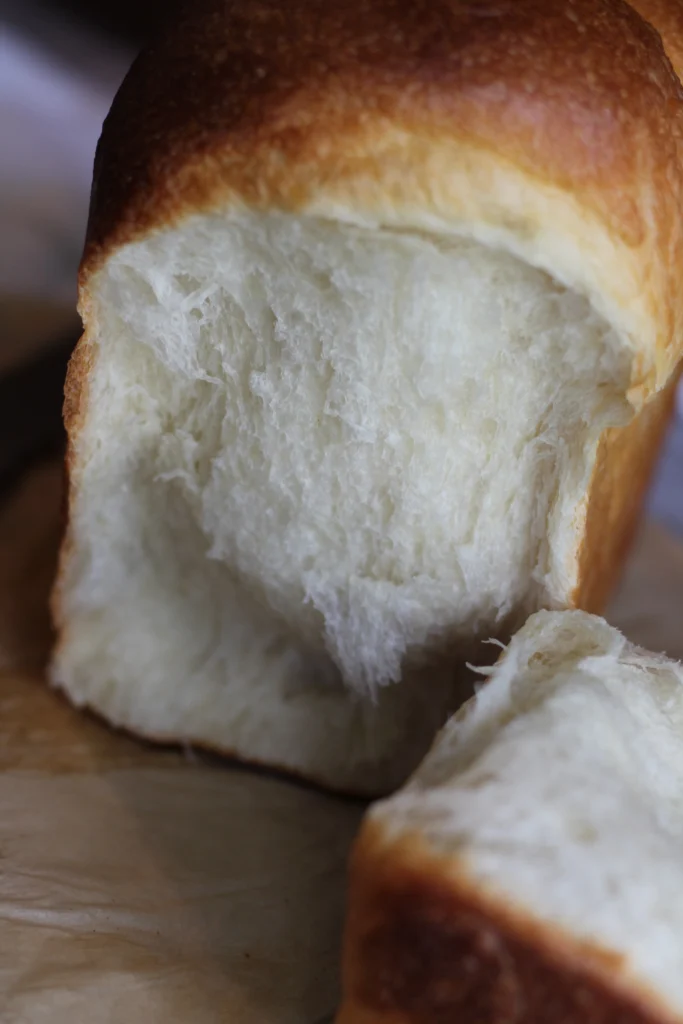
A soft, fluffy potato flake sourdough milk bread made with tangzhong for the most tender texture. This loaf blends the rich sweetness and pillowy structure of Japanese milk bread with the unique depth of potato flake sourdough. The result is a cloud-soft pull-apart sandwich bread that slices beautifully and stays fresh longer than a traditional bread.
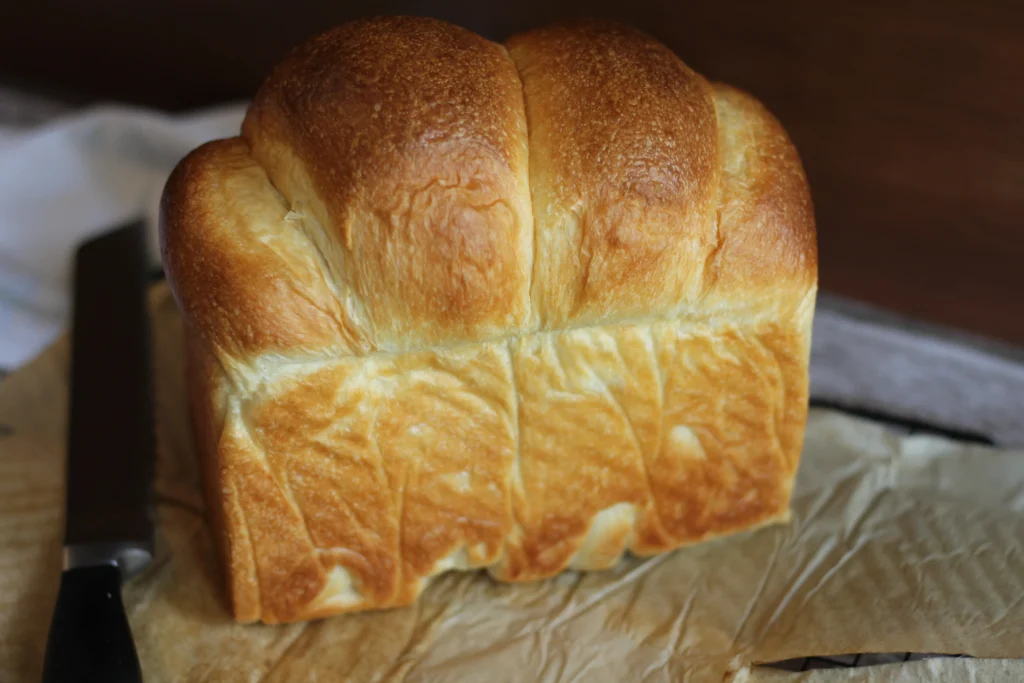
What makes this bread special is the combination of two things: your potato flake sourdough starter and the tangzhong method. The starter rises the dough naturally and brings delicious depth of flavor, while tangzhong makes sure your bread is light, tender, and stays soft even after sitting on the counter for a few days.
Why This Recipe Works
This recipe uses three key elements for softness, flavor, and texture:
- Potato flake sourdough starter – adds rise, depth, and a subtle sweetness unique to potato flake sourdough breads.
- Tangzhong – a cooked mixture of flour, milk, and water that helps the loaf bake up soft and stay moist for days.
- Milk + milk powder – enhances tenderness and gives that classic milk-bread richness.
If you love bread that pulls apart in feathery strands, this one is for you.
A Brief History of Tangzhong
If this is the first time you have heard of tangzhong, it might sound intimidating, but don’t let the name fool you — it’s nothing more than cooking a little bit of flour with water and/or milk before adding it to your dough. This quick step changes the texture of your bread in a big way.
When flour is heated with liquid to around 150°F, the starches gelatinize and hold on to extra moisture. That’s why breads made with tangzhong stay soft longer and don’t dry out as fast. It’s a tiny investment of time (just a few minutes on the stove) for a loaf that lasts all week! Well, unless you eat it before then!
Tangzhong (also sometimes called a water roux) has roots in East Asian baking, especially in Japanese and Chinese milk breads. The method became widely known after Yvonne Chen published The 65° Bread Doctor, which popularized using a pre-cooked flour paste to achieve incredibly soft, long-lasting bread.
Today, you’ll find tangzhong used in many Japanese bakery-style yeast bread, most famously in shokupan (Japanese milk bread).
This post may contain affiliate links through amazon, which means I may make a small commission at no extra cost to you. When you make a purchase through my link, you help me to keep Little Tennessee Home up and running! Thank you for your support! See my full disclosure here.
Tools Needed
You don’t need a big fancy setup for this bread — just a few kitchen basics:
- Small saucepan & whisk – for cooking the tangzhong.
- Mixing bowl or stand mixer – you can knead by hand, but a stand mixer with a dough hook will be much easier.
- Plastic wrap – to cover your dough during the rise.
- Bench scraper – helpful for dividing and shaping the dough.
- 9×4 pullman pan (or a standard loaf pan) – Pullman loaf pans give it that tall, bakery-style shape, but either works.
- Pastry brush – for brushing on milk or egg wash before baking.
- Instant-read thermometer – optional, but really helpful for checking doneness (you’re aiming for 190°F).
- Wire cooling rack – so your bread cools evenly after baking.
- Kitchen scale and/or measuring cups and spoons – necessary for measuring ingredients.
Ingredients
Tangzhong
- 3 tablespoons water (43 grams)
- 6 tablespoons whole milk (83 grams)
- 3 tablespoons bread flour (21 grams)
Dough
- 3 ¼ cups bread flour (407 grams)
- 4 tablespoons milk powder (35 grams)
- ¼ cup sugar (64 grams)
- 1 teaspoon salt (7 grams)
- 1 large egg (about 50 grams)
- ⅓ cup potato flake sourdough starter (81 grams)
- Tangzhong (from above)
Instructions
Make the Tangzhong
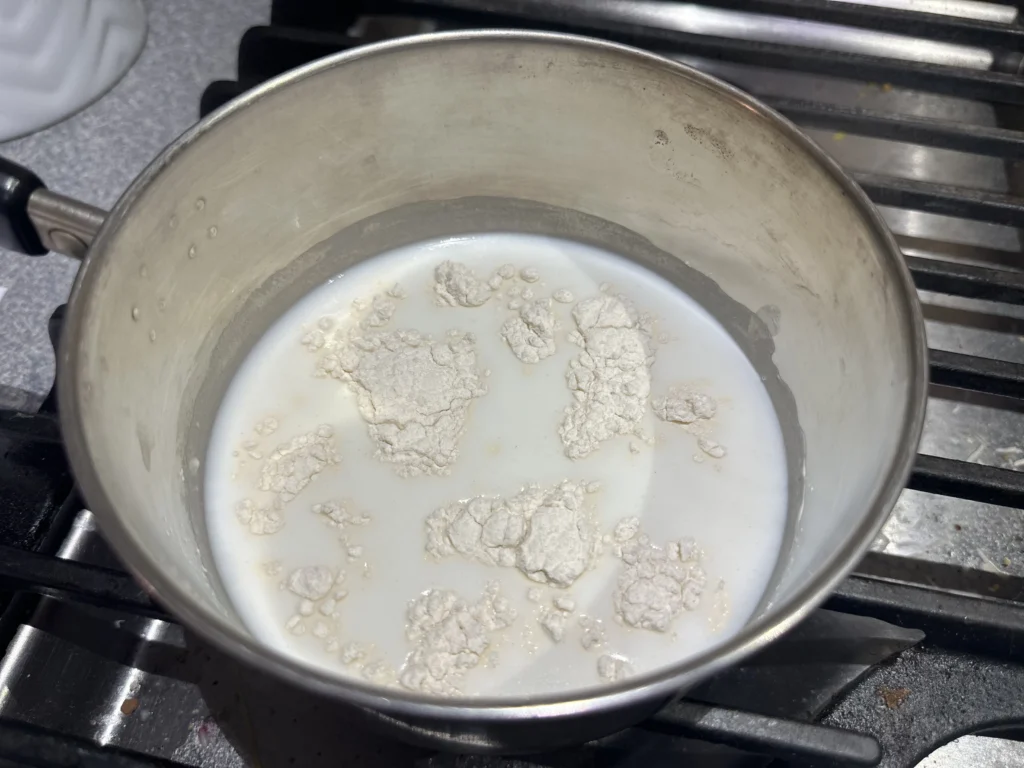
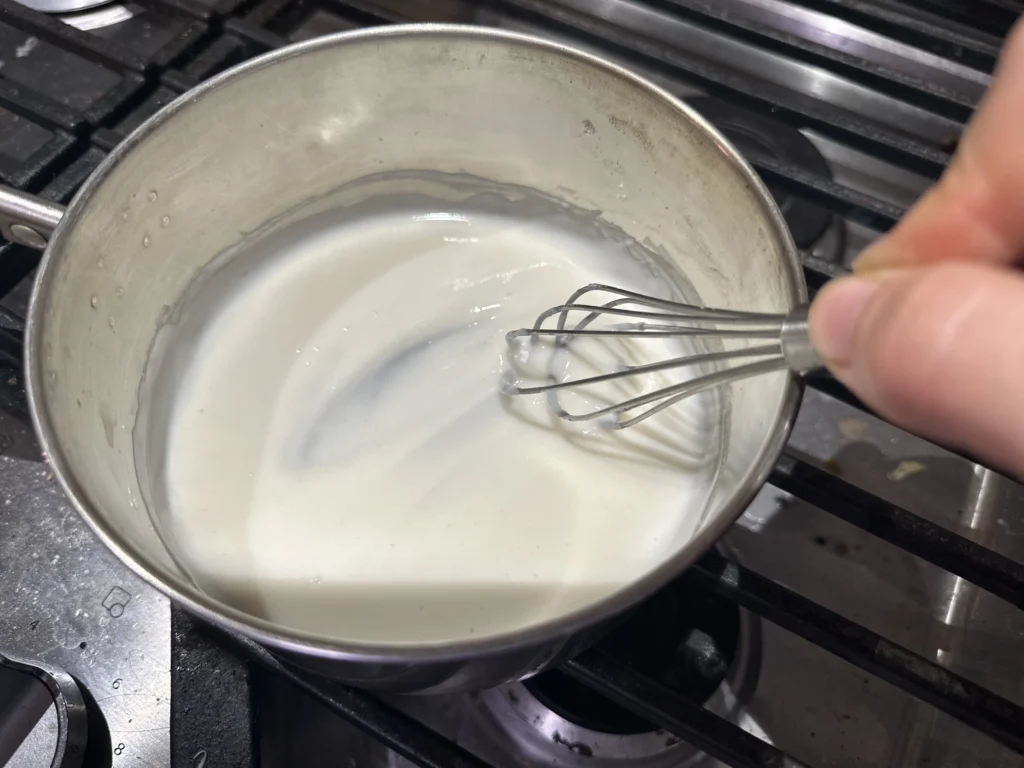
In a small saucepan, combine water, whole milk, and bread flour. Whisk until smooth with no lumps. Place the saucepan over low heat and cook, whisking constantly, for 3 to 5 minutes, or until the mixture thickens and the whisk leaves lines on the bottom of the pan.
Transfer it to a small bowl or simply remove from the heat to let it cool until just lukewarm.
Mix and Knead the Dough
While the tangzhong is cooling, add the remaining dough ingredients to your stand mixer bowl.
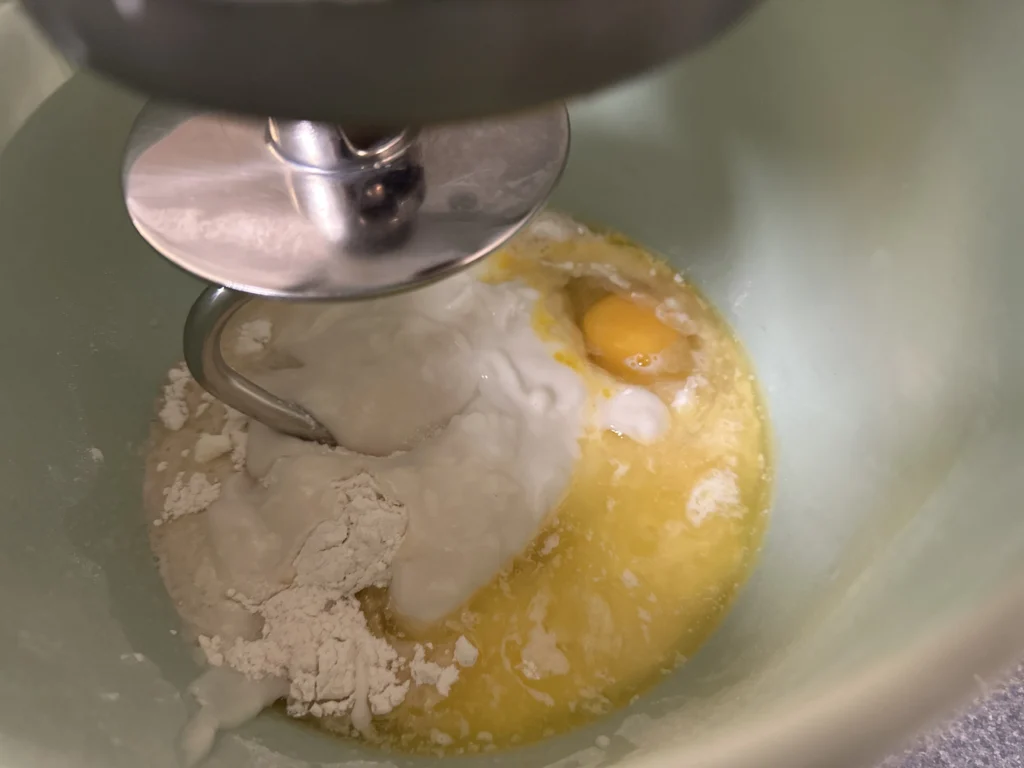
Add the cooled tangzhong to the rest of your dough ingredients.
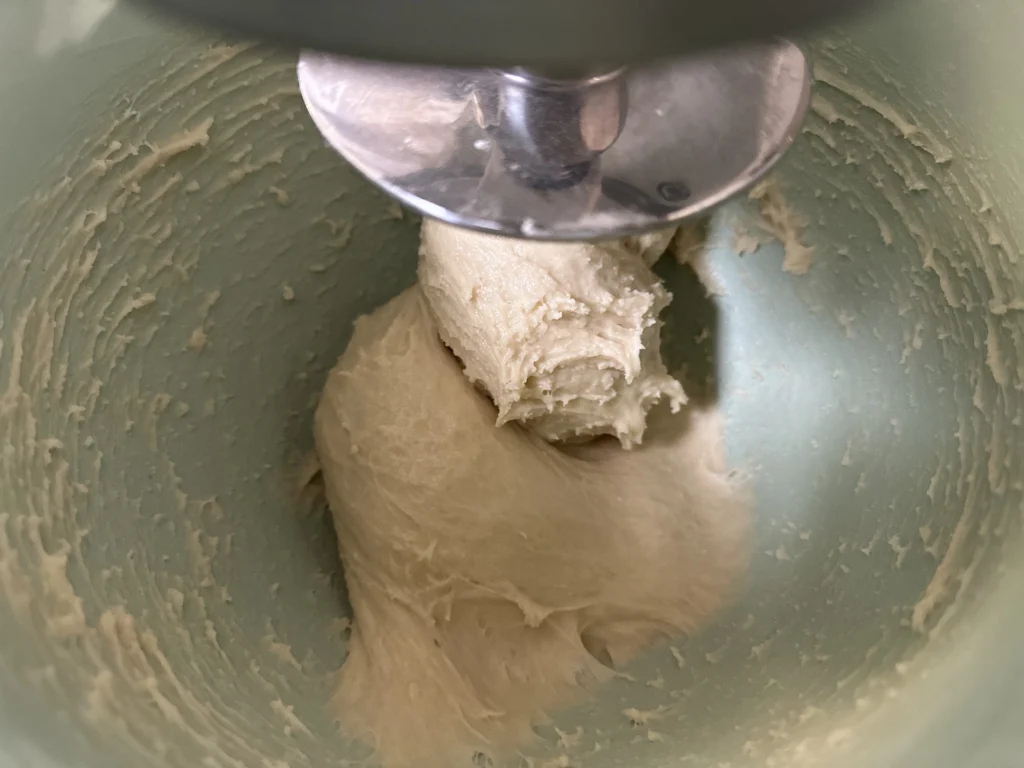
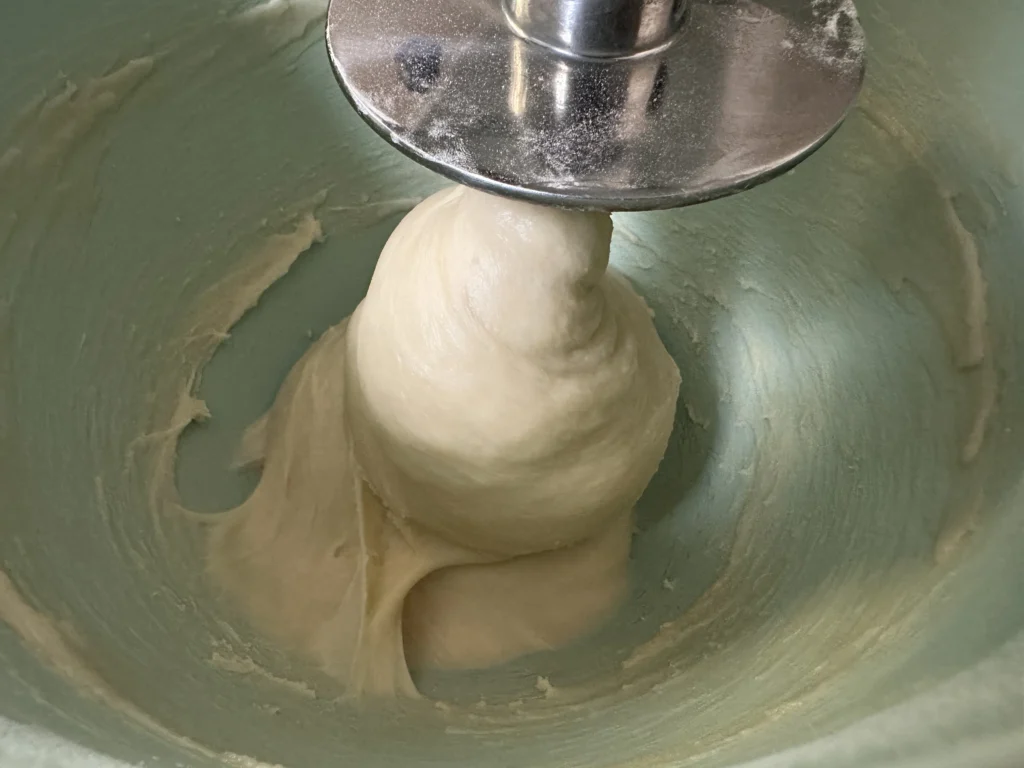
If you’re using a stand mixer, let it knead for about 12–15 minutes until the dough is smooth, elastic, and just slightly tacky. The dough should pull from the sides of the bowl.
Don’t be tempted to add extra flour too soon — this dough should feel soft. The long time kneading is worth it because that’s what gives you the stretchy, fluffy crumb and good rise.
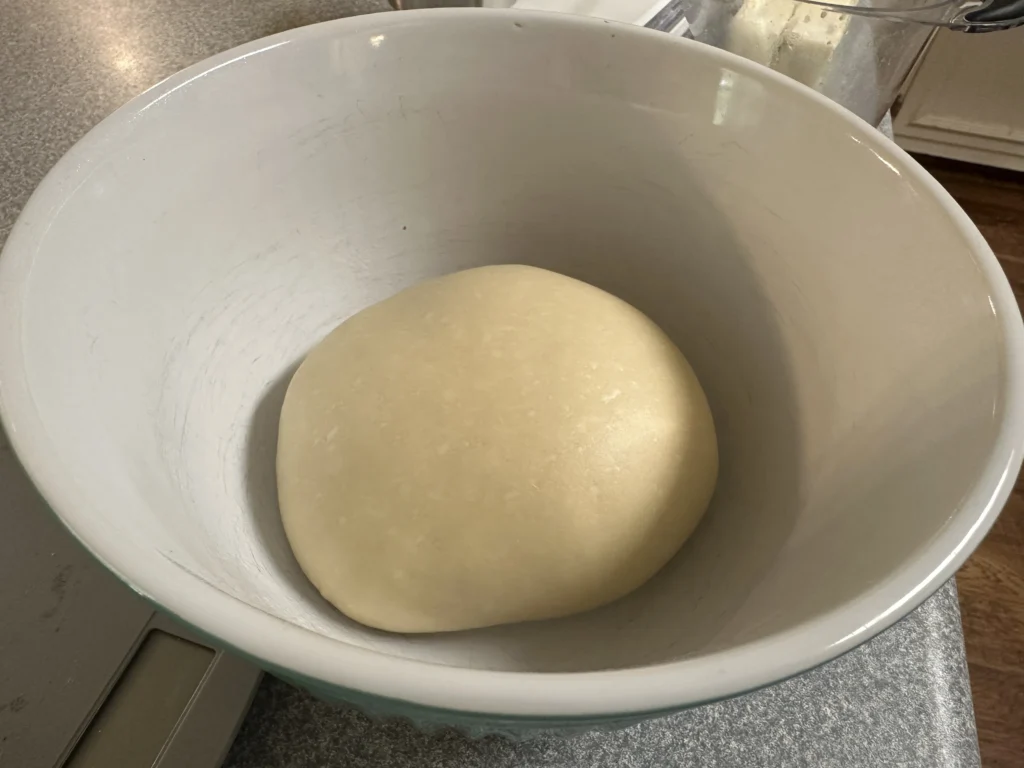
Shape it into a ball, place it in a lightly greased bowl, and cover with plastic wrap. Let it rise for about 6 hours at room temperature. Until almost doubled, it should look noticeably puffy.
Shape the Loaf
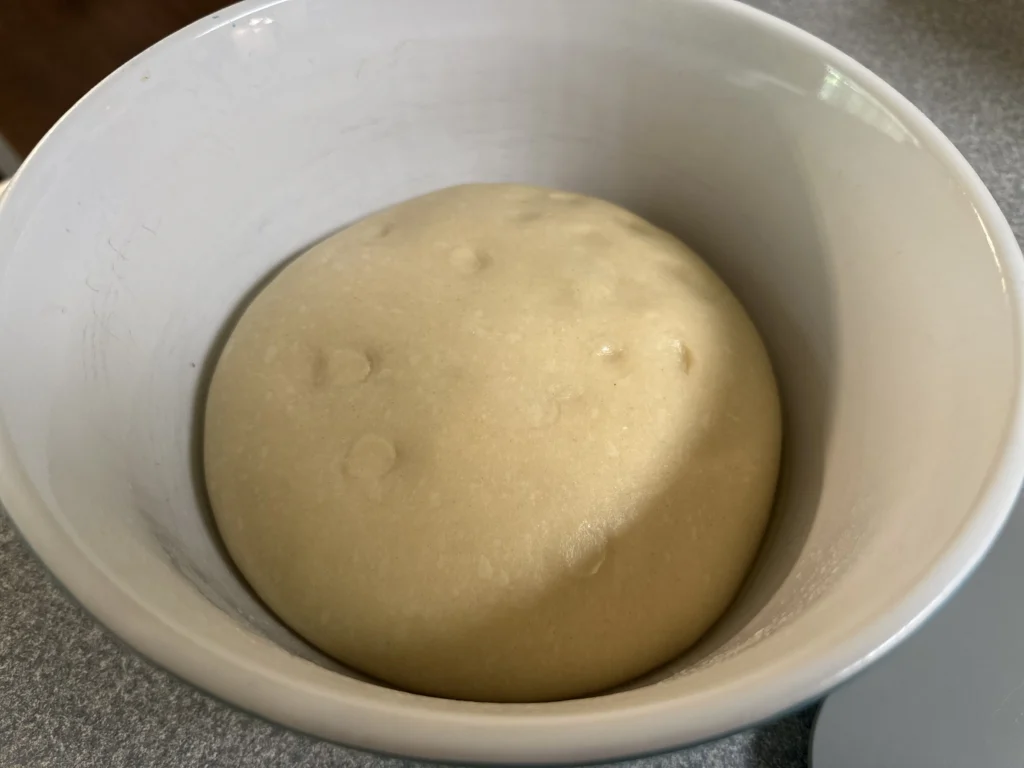
After the first rise turn the dough out and gently deflate it. (if you see all the little poke spots on the dough, you are seeing evidence of my two year old wanting to help in the kitchen!)
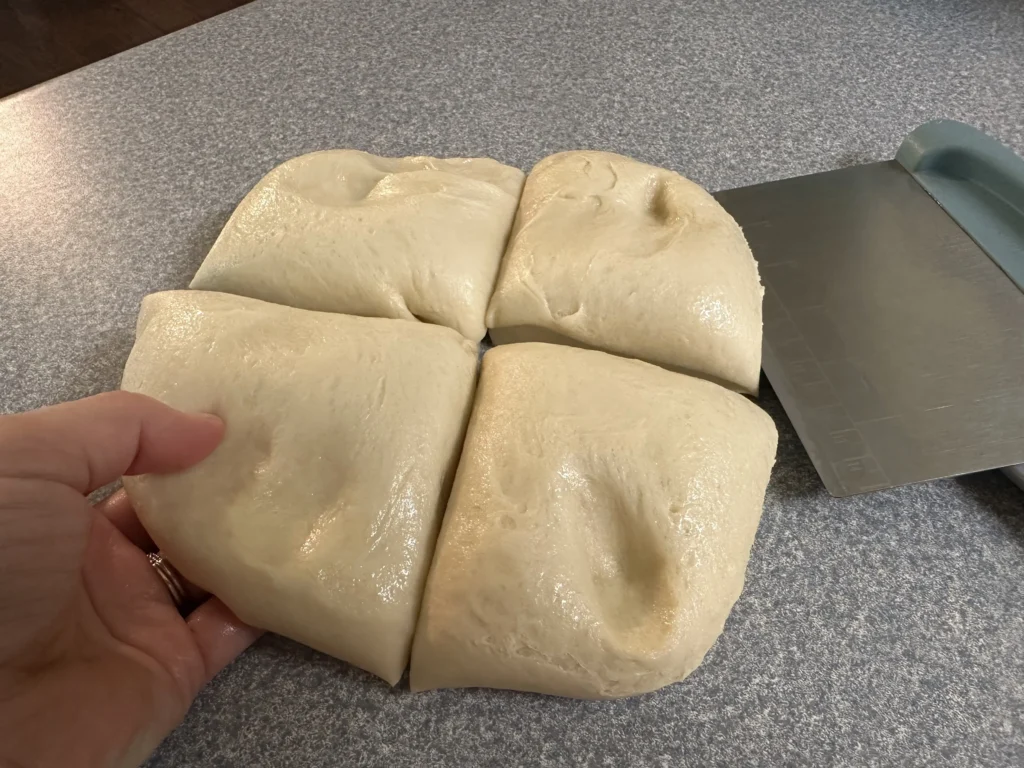
Divide dough it into four equal pieces (about 194 grams each if you’re weighing).
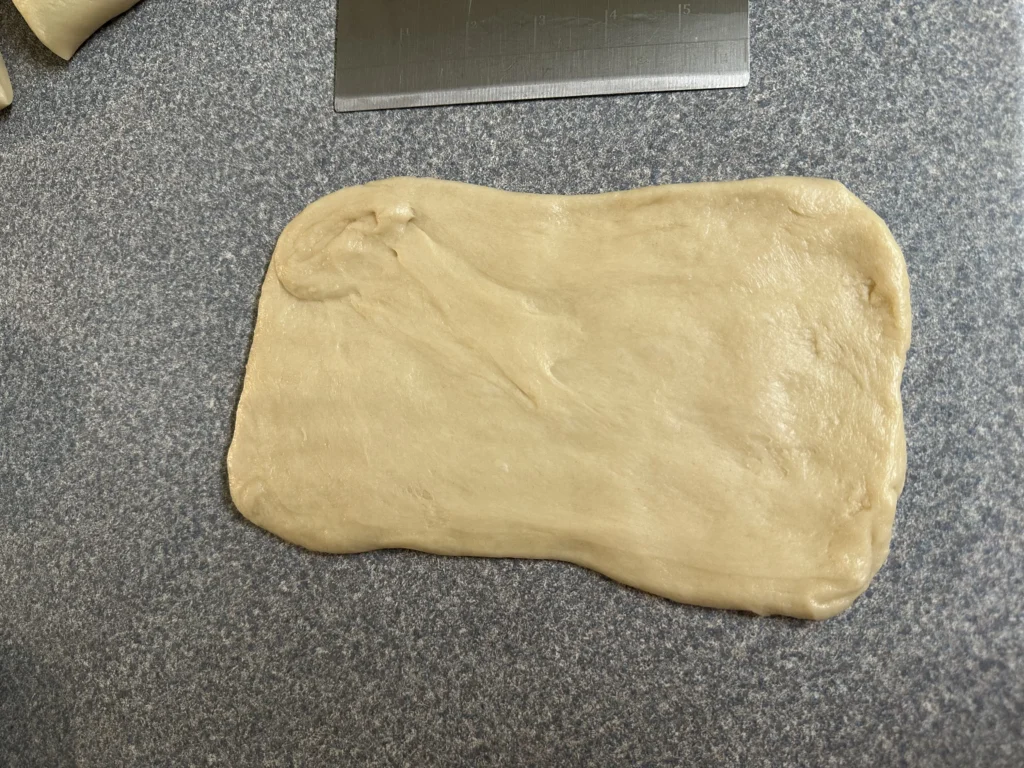
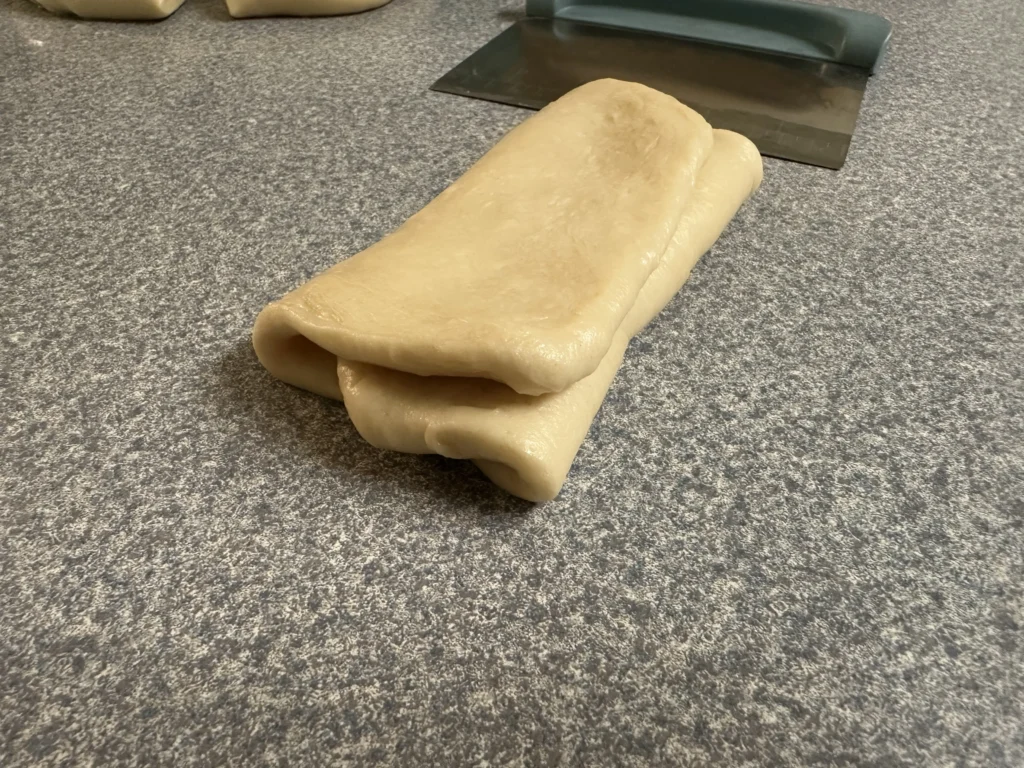
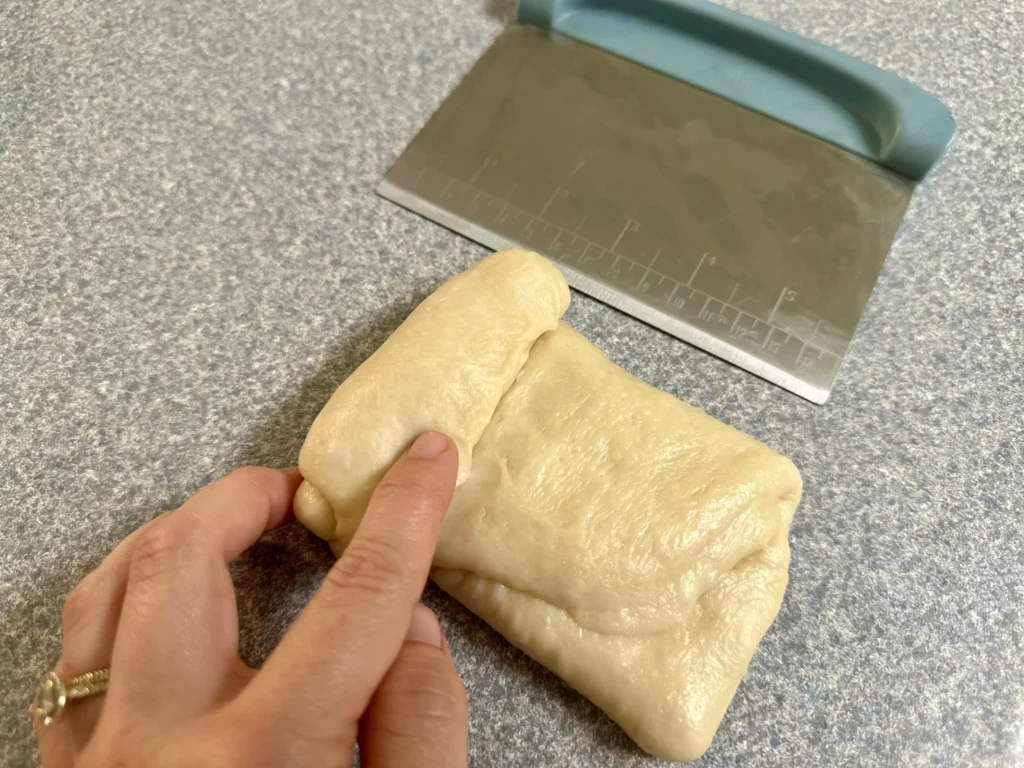
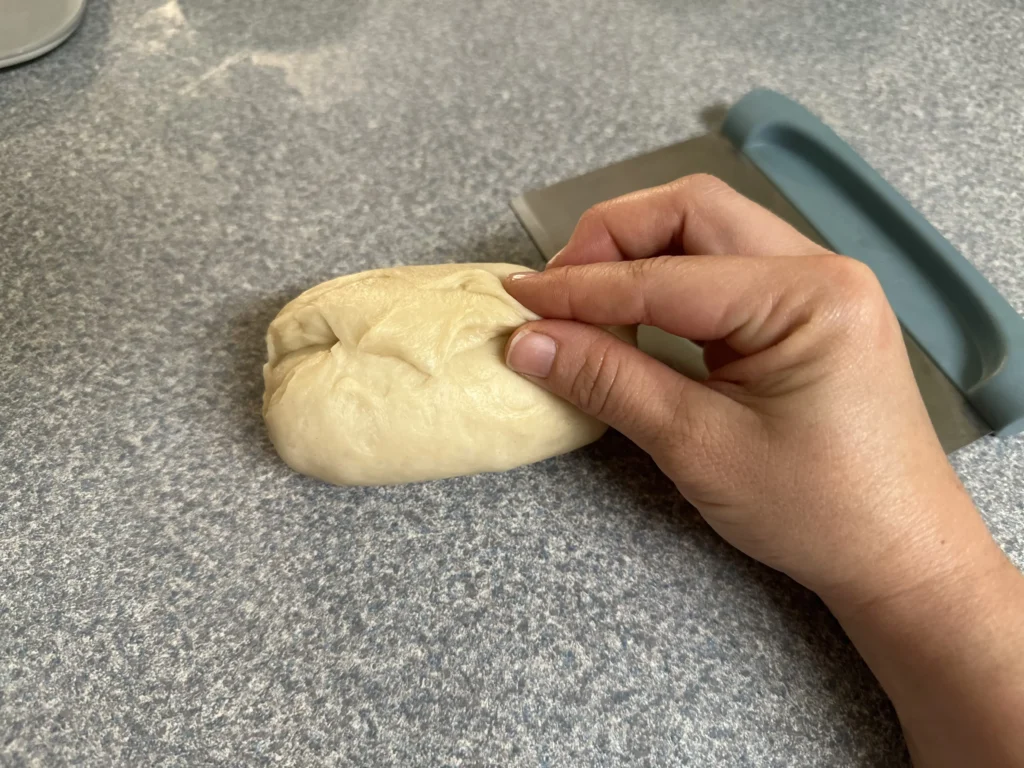
For each piece:
- Press it into a rectangle about 5″ x 8″.
- Fold it like a letter (short ends toward the middle).
- Press it out again into a smaller rectangle, about 3″ x 6″.
- Roll that up into a log, starting with the short end.
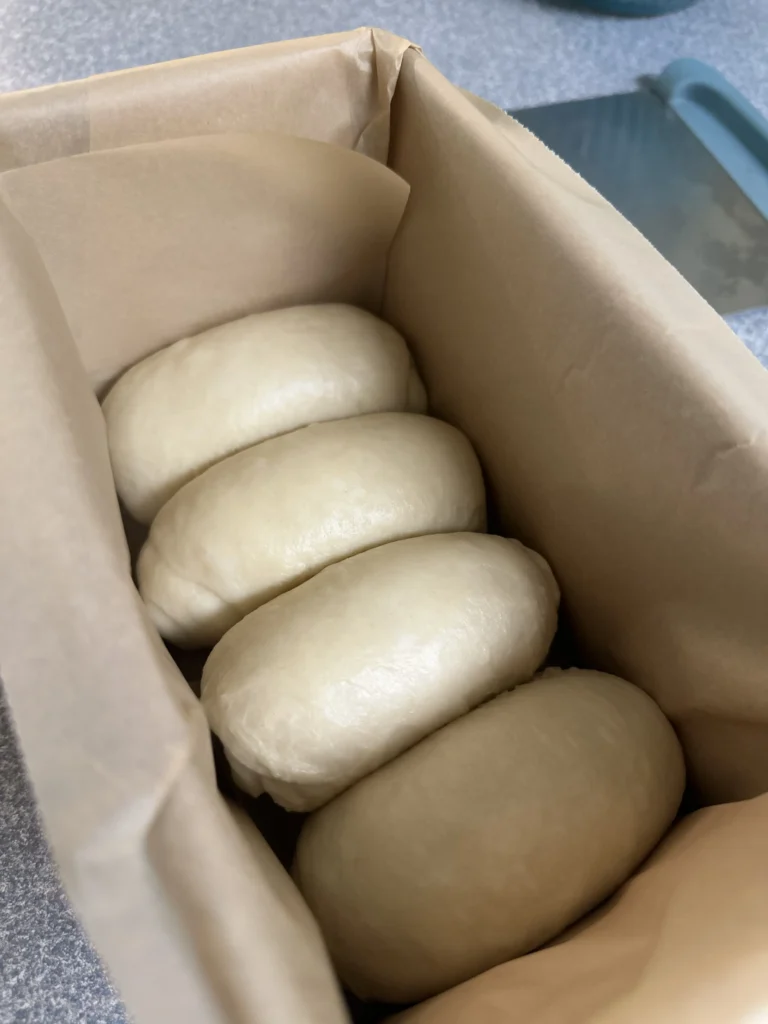
Place all four logs seam-side down in a greased or parchment-lined 9×5 pullman pan. (If using a usa bakeware pullman pan, it does not need to be greased or lined with parchment paper.)
The Second Rise
Cover the pan with plastic wrap and let the dough rise for another 6 hours, or until doubled.
The amount of time it needs to rise varies from house to house and even from season to season. By the end of the second rise, it should be doubled, puffy, and almost filling the pan. It will rise even more in the oven.
Bake the Bread
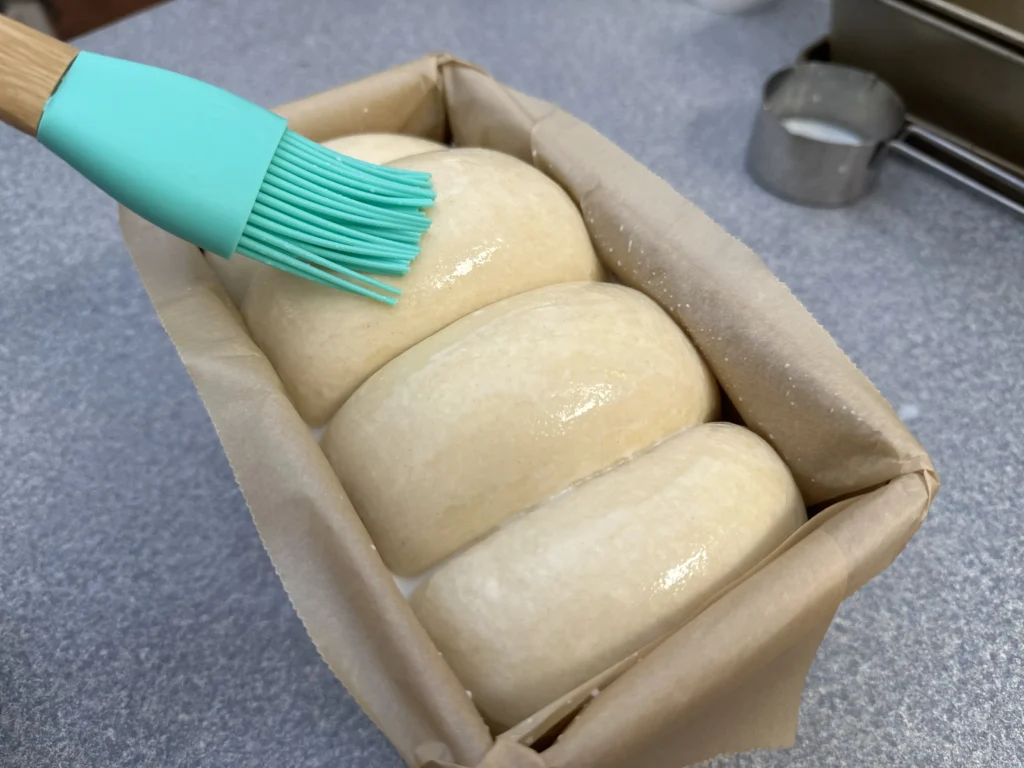
Preheat your oven to 350°F. Brush the top with milk for a soft crust. Alternatively, you can use an egg wash (1 egg whisked with 1 tablespoon water) if you want that shiny, bakery-style golden top.
Bake for 30–35 minutes, until the loaf is golden brown and the internal temperature hits 190°F. If the loaf of bread browns too quickly, tent it with foil for the last 10 minutes.
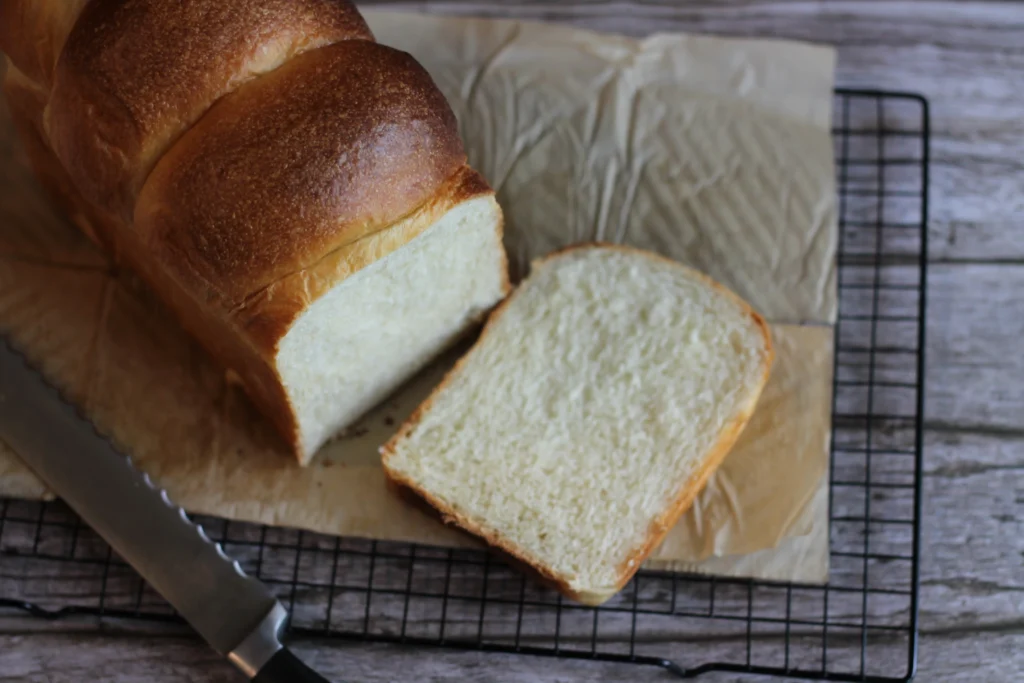
Let the bread cool in the pan until you can handle it, then move it to a wire rack to cool completely.
Tips for Success
- Tent with foil if browning too quickly
- Tangzhong can be made ahead of time and refrigerated
Storage Instructions
- Room temperature: Wrap tightly or store in a bread bag for 4–5 days. (Tangzhong helps it stay soft!)
- Freezer: Slice, wrap, and freeze for up to 3 months. Thaw at room temperature or toast from frozen.
- Do not refrigerate: It will dry out faster.
Substitutions
- Whole milk: 2% also works
- Bread flour: all purpose flour can be used, but may have a slightly different texture. You can add in a tablespoon of vital wheat gluten to make it more similar to bread flour.
- 9×4 Pullman pan: a standard loaf pan works, but shape will differ slightly
- Milk Powder: There isn’t a perfect substitution for milk powder that will achieve identical results, see section below for more info.
Why Milk Powder Matters
One of the ingredients you might not be used to seeing in bread recipes is milk powder. Don’t skip it — it makes a difference! Milk powder adds richness and helps create that slightly sweet, milky flavor that milk bread is known for. It also makes the crumb more tender and the crust softer.
If you don’t have milk powder, I highly recommend getting some for this recipe. However, if you are unable to purchase it where you live or just have to give it a try before you can get your hands on some, replace the water in the tangzhong with milk and add 2 tablespoons of dehydrated potatoes (instant potato flakes) into your dough to help retain moisture.
Why Use Potato Flake Starter in Milk Bread?
If you’ve been baking with a potato flake sourdough starter, you already know it acts a little differently than a flour-and-water starter. It tends to be sweeter, milder, and often makes loaves that are less tangy than traditional sourdough. That makes it the perfect partner for milk bread, which is supposed to be soft and slightly sweet without a lot of sourness.
The wild yeasts in the starter do all the heavy lifting for the rise, but it’s a slower ferment — and that slow rise is actually a good thing here. The flavor develops more fully, and the end result is bread that feels almost “bakery-quality,” but made right in your kitchen.
If you don’t have your own starter, you can click here to find the potato flake starter recipe.
FAQ
Can I use a traditional sourdough starter (flour & water) instead of potato flake starter?Yes, you can. But it will need some adjustments to the liquid and flour. The bread will turn out a bit more tangy, but still soft and fluffy. You can also convert your existing starter into a potato flake starter.
What’s the difference between milk bread and regular white bread? Milk bread has milk, sugar, and egg in the dough, which gives it a sweeter flavor and extra soft crumb. Regular white bread tends to be leaner, with just flour, water, salt, and yeast (or starter). If you are looking for the original potato flake sourdough bread recipe, you can find it here.
Can I slow down the rise?Yes. After shaping the loaf, you can refrigerate it overnight instead of letting it rise at room temperature. The next day, bring it back to room temp and let it finish rising before baking. You can also refrigerate the mixed dough before shaping to pause it at this stage also.
Pin for later and share with a friend:

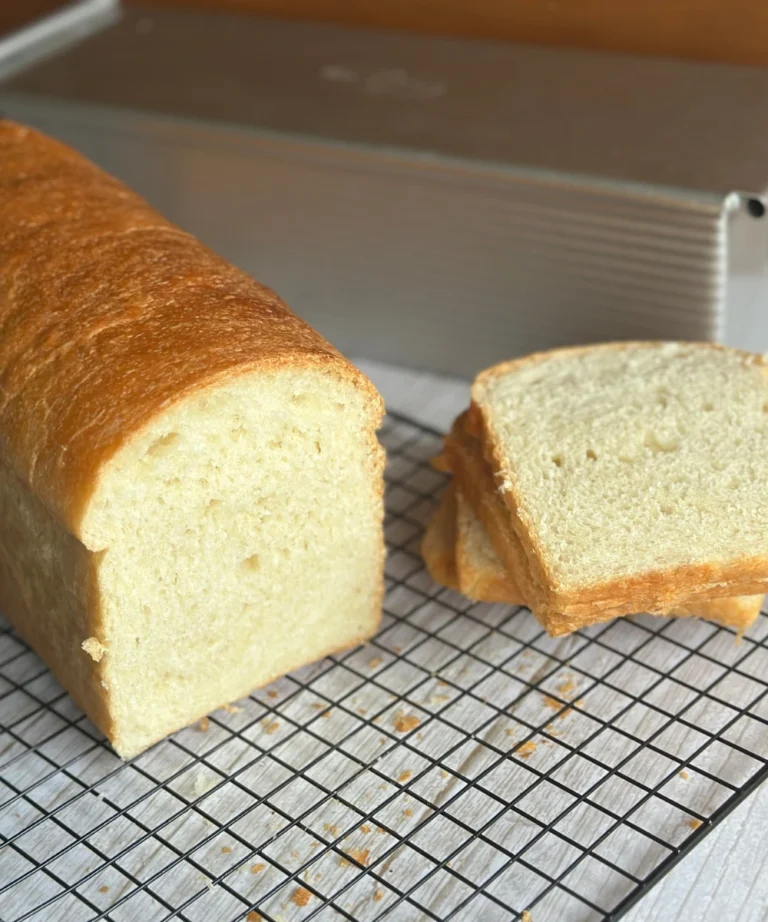
This potato flake sourdough milk bread is one of the most delicious bread recipes I’ve tasted. It looks impressive, but once you try it, you’ll see it’s not complicated — just a bit of patience with the rise. And the reward is worth it: a loaf so soft and tender, it’s hard to resist tearing into it while it’s still warm.
If you give this recipe a try, I would greatly appreciate if you came back and gave it a 5-star review! It helps me out so much!
I also love seeing all of the delicious creations you make! Share your photo over on instagram or facebook and give me a tag @littletennesseehome
Potato Flake Sourdough Milk Bread
Equipment
- Stand mixer with dough hook
- Small saucepan
- Whisk
- Kitchen scale
- Bench scraper or sharp knife
- 9×4 Pullman pan
- Plastic wrap
- Pastry brush
- Digital thermometer
Ingredients
- Tangzhong
- 3 tablespoons water 43 grams
- 6 tablespoons whole milk 83 grams
- 3 tablespoons bread flour 21 grams
- Dough
- 3 ¼ cups bread flour 407 grams
- 4 tablespoons milk powder 35 grams
- ¼ cup sugar 64 grams
- 1 teaspoon salt 7 grams
- 1 large egg about 50 grams
- ⅓ cup starter 81 grams
Instructions
- To make the tangzhong:
- In a small saucepan, combine water, whole milk, and bread flour. Whisk until smooth with no lumps.
- Place the saucepan over low heat and cook, whisking constantly, for 3 to 5 minutes, or until the mixture thickens and the whisk leaves lines on the bottom of the pan.
- Remove from heat and allow to cool to lukewarm.
- To make the dough:
- In the bowl of a stand mixer, combine the remaining dough ingredients.
- Add the cooled tangzhong and mix on medium-low speed until a smooth, elastic dough forms. This may take up to 15 minutes in the stand mixer.
- Shape the dough into a ball and place it in a lightly greased bowl. Cover with plastic wrap and let it rest for about 6 hours, or until puffy and just under doubled in size.
- Gently deflate the dough and divide it into four equal pieces. If using a scale, each piece will weigh around 194 g, with the total dough weight being around 778 g.
- Flatten each piece of dough into a 5″ x 8″ rectangle. Fold the short ends in toward the center, like a letter. Flatten the folded dough into 3″ x 6″ rectangles. Then, starting from a short end, roll each piece into a 4″ log.
- Place the four logs seam side down in a lightly greased or parchment-lined 9×4 pullman pan, placing them side by side.
- Cover the pan and let the dough rise for about 6 hours, or until doubled in size.
- After the second rise, preheat your oven to 350°F.
- Brush the top of the loaf with milk, then bake for 30 to 35 minutes, or until golden brown. Use a digital thermometer to check the internal temperature, which should be at least 190°F.
- Once baked, remove the loaf from the oven and let it cool in the pan until it can be safely transferred to a wire rack to cool completely.


What adjustments would I need to make if using Fresh milled flour?